 ×
×
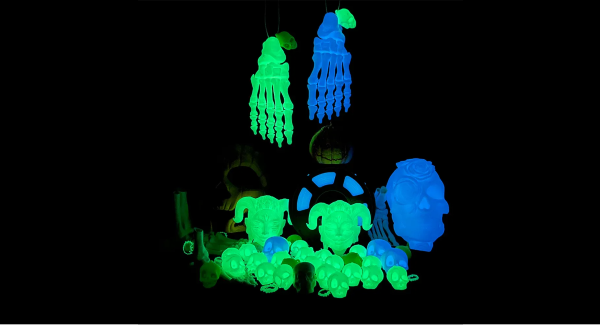
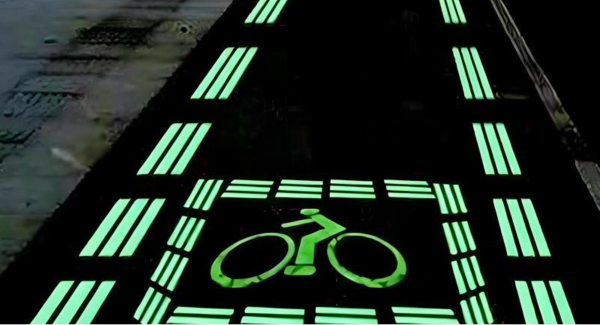
A: Glow in the dark powder is widely used across multiple industries, including safety signage, road and traffic marking, construction and architectural design. It is also commonly applied in consumer products such as toys, decorative items, and crafts. Other key industries include emergency systems, marine applications and public infrastructure. Its versatility makes it suitable for both functional safety use and aesthetic design projects.
A: Our glow in the dark powder is known for its high brightness, long afterglow duration and stable performance. We offer multiple generations optimized for different charging speeds, glow times and application needs. Compared to many competitors our products provide more consistent particle distribution and better durability. We also maintain strict quality control to ensure reliable batch-to-batch performance.
A: Yes, we offer samples for evaluation and testing. Availability may depend on the product type and quantity required. Please contact us directly to discuss your sample needs.
A: Yes, we offer customization services. This includes custom particle sizes, glow colors, and performance characteristics for our powders as well as custom dimensions and imagery for our signs. Customization availability depends varies heavily on the product in question. Write to us for more information on your specific customization needs.
A: The primary difference lies in the duration of the glow and the light source required:
Photoluminescent (Glow in the dark): These materials absorb energy from any light source and store it to emit a visible glow in total darkness for several hours. No continuous light source is required once the device is charged.
Fluorescent (Neon/Day-glo): These materials appear extra bright under daylight or UV light (blacklight) but cannot store energy. They stop glowing the instant the light source is removed and do not glow in total darkness.
A: Glow in the dark pigment is commonly seen in safety signs, evacuation maps and decorative panels, as well as in high-brightness products such as photoluminescent road studs and pathway stones. It is also used in glow in the dark plastic parts, toys, and industrial components produced through injection molding and extrusion. In the textile industry, it appears in safety apparel, embroidery threads and specialized glow fibers designed for visibility in low-light environments.
A: We hold multiple international certifications including RoHS, REACH, ISO, and SGS reports, backed by an AAA enterprise credit rating.
A: We offer 15 photoluminescent powders in different colors, including 5 basic shades (yellow-green, blue-green, sky blue、red and purple) and 12 neon colors such as red, peach, orange, white, and more. For color photos, please contact our customer service.
A: Our photoluminescent pigment absorbs various types of visible light. With just 5–15 minutes of light exposure, it can glow in the dark for over 20 hours.
A: We follow a strict Batch-to-Batch Consistency protocol and use high-precision testing to ensure reliability:
1.QC Standard: We keep a sealed sample of every batch. New shipments are benchmarked against the previous batch; they are only approved if properties (Brightness, Color, Particle Size, etc.) fluctuate within ±5%.
2.Brightness Testing: Ricoh LS-110 luminance meters for precise afterglow data.
3.Particle Analysis: Verified by OMEC Laser Particle Size Analyzers to ensure perfect dispersion.
A: Temperature is a key factor influencing the performance of photoluminescent powder. At normal temperature it can exhibit the best brightness and afterglow duration. When the temperature is too high it will accelerate the internal energy release, causing the light to dim rapidly and the afterglow duration to be significantly shortened. Extreme high temperatures may even cause permanent damage. In a low-temperature environment the light decay slows down and the afterglow duration becomes longer, but the initial excitation brightness may be slightly weaker.
A: Yes, we also offer water-resistant photoluminescent powder. The powder is made waterproof through a special surface coating treatment that protects the powder from water damage while maintaining pigment glow performance.
A: Our photoluminescent powder features excellent stability with an over 10 year shelf life provided it's stored in a sealed and dry environment.
A: In safety signs it is mixed into the sign's coating or ink and applied to key symbols, text or backgrounds. The material absorbs light from normal room or daylight conditions and then emits a visible glow when the lights go out. This makes exit routes, warnings and critical instructions remain readable during power outages or in smoke-filled, low-visibility situations without needing electricity or batteries.
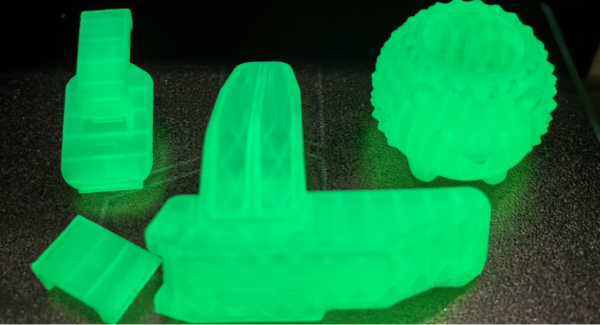
A: Absolutely. Our photoluminescent pigment can indeed be blended with various plastics (such as PP, PC,PS,PE,PET,PVC,ABS,etc.) to create self-luminous plastic products. We also offer related photoluminescent masterbatches. For specific details, please feel free to consult our customer service team.
A: Yes. Our finest powder can achieve a D50 of approximately 5 microns, making it suitable for textile applications such as luminous fibers.
A: The particle size of our photoluminescent pigment is 5–155 microns, which is suitable for a wide range of applications.We have multiple grades available all with a 5 micron D50 variation to allow you to choose the best grade for your particular application.
A: Yes, we can provide test reports for the particle size distribution, luminance and decay time.

Room 815 And 816, Building 2, Dongfang Mao Commercial Center, Hangzhou, Zhejiang
Copyright © 2026 Hangzhou Junting Luminescence Technology Co., Ltd. All rights reserved.
 EN
EN