 ×
Author: Technical Marketing Team
Reviewed by: Material R&D Specialist
Published: Oct 23, 2026
Key takeaways
For decades, glow-in-the-dark photoluminescent pigment has been widely used within the toy industry. Many buyers and designers still associate glow-in-the-dark toys with simple plastic novelties. But advances in encapsulated strontium aluminate glow powder have expanded real-world design opportunities for toy developers.
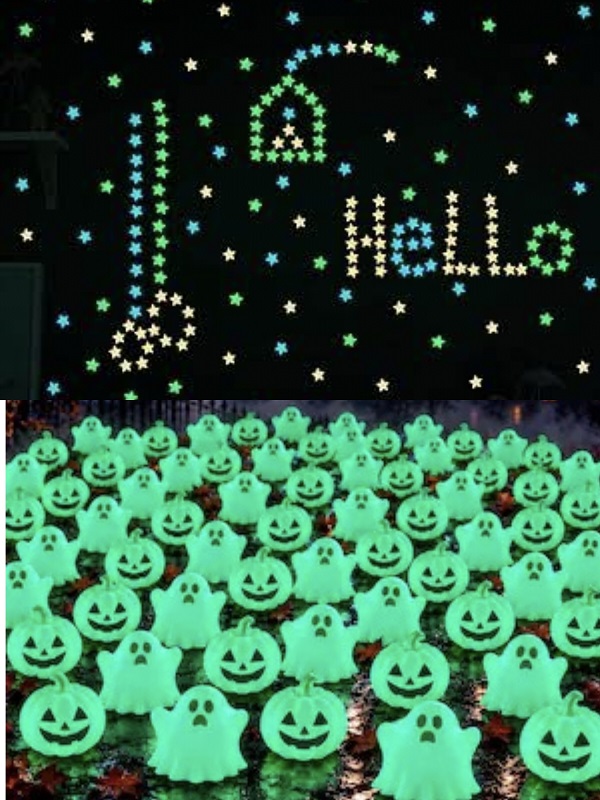
Early glow toys were simple to make. Manufacturers mostly applied luminescent spray coating onto finished plastic parts:
These classic items demonstrated the visual effect of photoluminescent pigment and laid the foundation for the glow-toy category. However, early products suffered clear limitations: most effects came only from surface spraying, delivering a single yellow-green glow, with limited interactive play value.
Today, modern encapsulated glow powder can be mixed directly into base materials rather than only applied as top-layer paint. This shift unlocks completely new product possibilities for toy brands and designers.
Many toy developers struggle to select the right glow raw material. Below is a practical comparison for toy-grade applications.
|
Item |
Strontium Aluminate |
Zinc Sulfide |
Afterglow performance |
High brightness, long persistence,8-12h |
Lower brightness, short afterglow |
Base-material compatibility |
Plastic masterbatch, resin, silicone, clay, textile |
Limited, mostly for surface coating |
Stability |
Good hydrolysis-resistance with surface encapsulation |
Prone to hydrolysis in moist environments |
Typical use in toys |
Injection-molded toys, DIY craft kits, resin products |
Low-cost short-term decorative novelties |
Below are high-potential toy concepts gaining traction on Etsy, TikTok Shop and Amazon. Each entry notes preferred raw-material form and practical production notes.
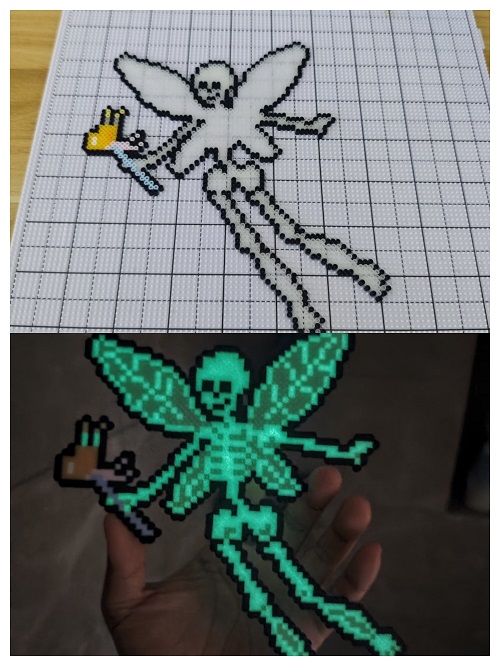
Glow-in-the-dark pigment is compounded into plastic masterbatch, so the whole bead glows, not just the surface. End-users assemble beads and fuse them with heat to build custom glowing artworks. This remains one of the steadiest DIY craft categories.
Production note: Select suitable particle-size pigment to avoid bead brittleness. Recommended particle size: 20–45 μm.
Photoluminescent pigment is blended into gel-based substrates. Many kits include extra glow paint for secondary colour-mixing to create multi-layer luminous visual effects for stress-relief sensory play.
Production note: Encapsulated-grade powder is required to prevent hydrolysis inside high-moisture gel systems.Recommended particle size:15–30 μm for smooth touch
Resin-cast miniature figures and miniature-landscape pieces are sold inside blind-bag packaging. Products show fine details under normal lighting and reveal hidden luminous patterns in darkness, matching global designer-toy and collectible trends.
Production note: Good dispersion is critical to avoid visible speckling within transparent resin.Recommended particle size:25–50 μm.
Unpainted plaster statues are paired with glow-in-the-dark paint. Consumers complete hand-painting work, and finished pieces emit light in dark surroundings. These kits remain popular within DIY art-toy markets.
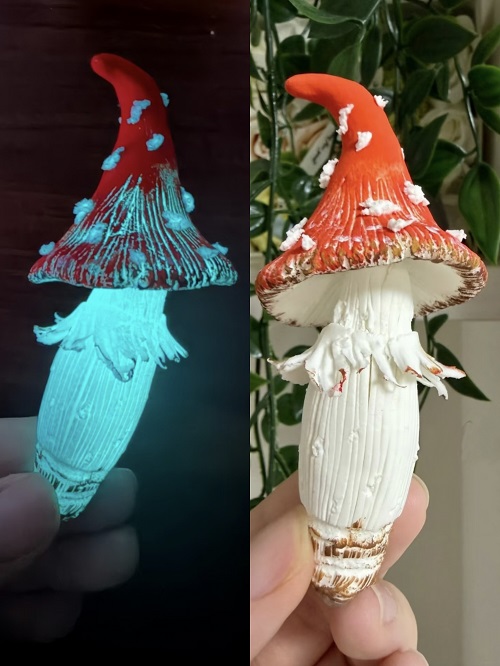
Creators can sculpt freely and build miniature scenes. Glow-in-the-dark powder disperses evenly throughout clay or sand substrates, rather than sitting on the surface as a coating.
Production note: Moisture-resistant encapsulated grades are strongly suggested.
Fabric is printed with a coating that contains strontium aluminate photoluminescent powder. Children draw glowing patterns onto toy surfaces using a high-brightness LED light pen.
For light-drawing plush toys, designers need short luminous lifetime by adjusting coating thickness and pigment loading, to get auto-fade reusable drawing effect.
Products such as luminous modular puzzle balls and spinning tops expand glow-in-the-dark offerings beyond children’s markets toward adult sensory-play consumers.
Toy-grade glow powder supports multiple common toy-manufacturing substrates. Below lists recommended product forms and key practical notes.
Substrate |
Suggested supply form |
Important processing notes |
Injection-molded plastic |
Check maximum processing temperature according to our masterbatch datasheet |
|
Epoxy / PU resin |
Control particle size for transparent cast pieces |
|
Silicone |
Glow in the dark powder |
Full pre-mixing required before curing |
Air-dry clay / moldable sand |
Glow in the dark powder |
Anti-hydrolysis treatment mandatory |
Water-based paint & plaster paint |
Glow in the dark powder |
Prevent sedimentation through formula adjustment |
Textile printing ink |
Fine-particle glow in the dark powder |
Match ink-system solvent resistance |
Raw photoluminescent pigment itself cannot be certified as a finished toy. Toy-safety standards apply to complete final products after compounding, moulding and colour matching.
Finished toys manufactured with our glow materials can be sent to third-party labs and tested against:
Important regulatory update: EU Toy Safety Regulation Regulation (EU) 2025/2509 entered into force Jan 1, 2026, with full application starting Aug 1, 2030. It introduces digital-product-passport obligations for toys sold within EU territory.
Manufacturers should arrange third-party testing using their real final-product formula. We can supply batch-specific COA and SDS documentation for raw pigment upon request.
Before placing orders for glow-in-the-dark raw materials for toy projects, confirm these key parameters:
A: Safety depends entirely on the finished toy product. Raw glow-in-the-dark pigment is not a finished toy. Final products must pass third-party toy-safety testing such as EN 71-3 and ASTM F963-17 according to your sales territory. Raw-material documentation (COA, SDS) supports but cannot replace finished-product certification.
A: Afterglow duration is determined by pigment grade, loading ratio, substrate transparency and light-charging conditions. Standard strontium-aluminate toy grades deliver strong initial brightness, while special short-cycle grades are made for fade-and-redraw interactive play concepts.
A: Strontium aluminate delivers far higher brightness and longer persistence and suits mixing inside plastics, resin and clay. Zinc sulfide is lower-cost but suffers poor moisture resistance and weaker glow performance; it is best reserved for simple surface-printed novelties.
A: In most cases yes, using glow-in-the-dark masterbatch. You will need to match pigment temperature tolerance and adjust loading percentage. Share your moulding parameters with our technical team for tailored suggestions.
A: Dark-coloured base materials absorb light energy and significantly reduce visible glow-in-the-dark output. Lighter-toned base substrates will deliver far better luminous results.
A: Request SDS safety data sheets, batch COA performance certificates. Remember these apply only to raw material. You will still need to organise third-party lab testing for your finished toy items.
Glow-in-the-dark photoluminescent pigment serves as a functional building block for toy developers. Almost any existing play pattern can be turned into a glow-enhanced product through smart formulation and design. Real innovation originates from designers’ creative concepts, not only from raw-material performance.
Hangzhou Junting Luminescence Technology supplies custom photoluminescent pigment and glow-in-the-dark masterbatch for global toy and craft manufacturers. Tell us your target substrate, sales-market compliance requirements and afterglow goals, and our team can deliver sample proposals within 48 hours.

Room 815 And 816, Building 2, Dongfang Mao Commercial Center, Hangzhou, Zhejiang
Copyright © 2026 Hangzhou Junting Luminescence Technology Co., Ltd. All rights reserved.
 EN