 ×
×
As the global plastics industry faces increasing pressure to address waste, chemical safety, and environmental impact, manufacturers are being challenged to look beyond the performance of a product and consider the materials used throughout its entire life cycle. At Hangzhou Junting Luminescence Technology Co., Ltd., we believe photoluminescent products should be developed with this broader responsibility in mind.
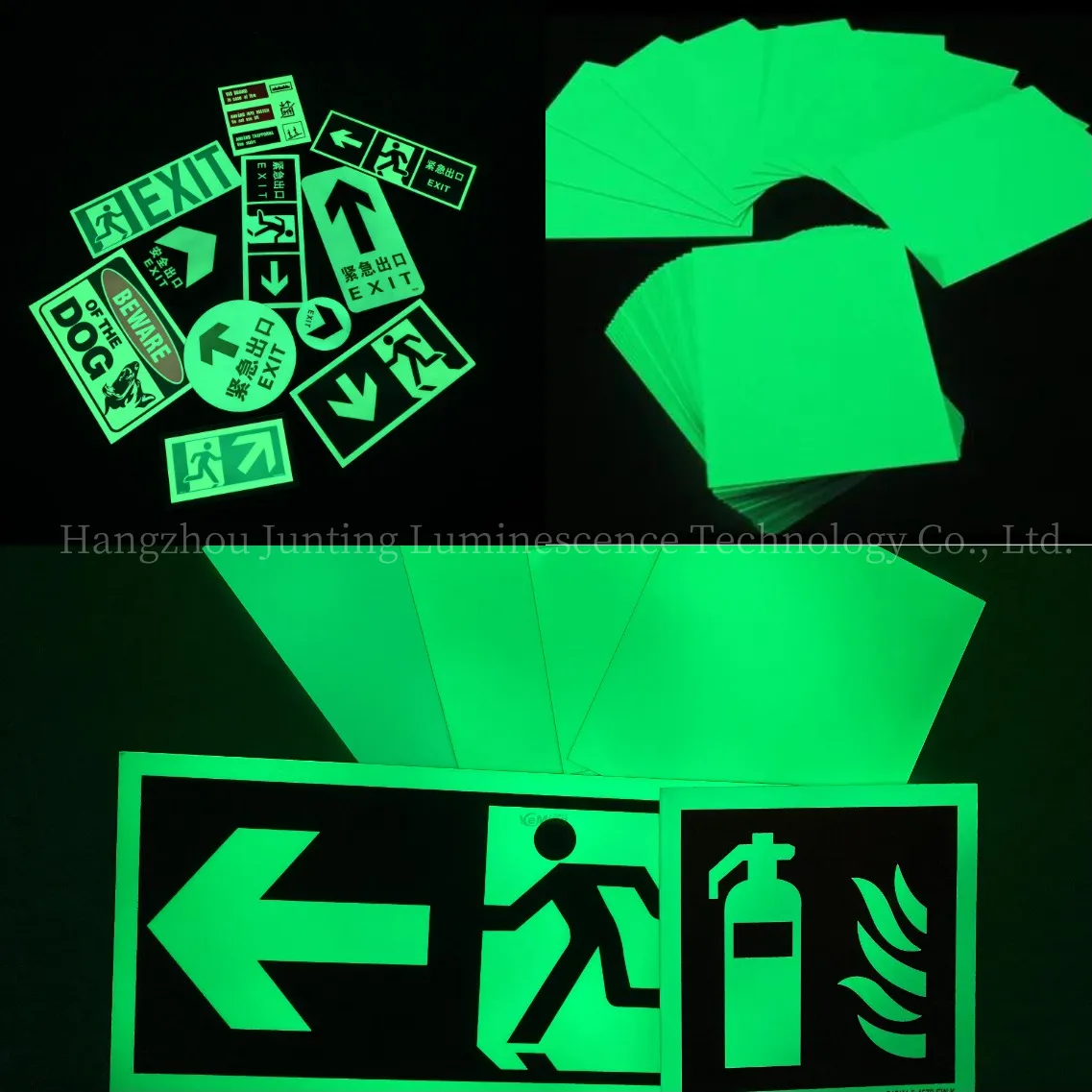
Our photoluminescent rigid sheets are designed to provide long-lasting luminous performance for applications including safety signage, evacuation systems, industrial identification and other situations where reliable visibility is important. However, product performance is only one part of the equation. As we continue developing our rigid sheet materials we are also working toward incorporating more environmentally responsible material solutions into our products. This is not an overnight process. Developing a material that combines photoluminescent performance, mechanical strength, durability, processing characteristics, appearance, and environmental considerations requires extensive testing and continuous improvement. Our current focus is therefore on gradually improving the material choices available to us while maintaining the performance standards expected from our products.
Rigid PVC is widely used in industrial and construction applications because it offers a useful combination of durability, processability, cost efficiency, and chemical resistance. These characteristics make it a practical material for photoluminescent rigid sheets. However, not all PVC products are manufactured to the same standard. The environmental profile of a PVC product can be influenced by the additives, stabilisers, plasticisers, pigments, processing aids, and other materials incorporated into the formulation. The European Chemicals Agency has investigated PVC and its additives and identified concerns associated with certain plasticisers, heat stabilisers, flame retardants, and the release of PVC microparticles. ECHA has also noted that additives can potentially be released from plastic products depending on factors including their concentration, the polymer matrix, and the conditions under which the product is used.
This is one reason we believe that discussions about environmentally responsible PVC should focus not only on the polymer itself, but also on the quality and composition of the finished material. Low-quality PVC can present additional challenges. Poorly controlled formulations may rely on unsuitable or excessive additives, contain unwanted impurities, have inconsistent material composition, or be difficult to recycle effectively. These issues can become particularly important when products eventually reach the end of their useful life.
The European Commission and ECHA have specifically examined concerns surrounding certain PVC additives, including historical use of substances such as lead- and cadmium-based stabilisers and certain phthalates, several of which have been restricted because of their potential risks.
One of the biggest challenges associated with plastics is what happens after a product is no longer needed. PVC can be technically recyclable, but recycling is influenced by the composition of the material, collection systems, contamination, additives, and the ability to separate different material streams. UNEP has highlighted that recycling alone cannot solve the broader plastics pollution problem and that product design, material selection, additives, and recycling infrastructure all influence whether plastic products can effectively enter circular systems.
End-of-life treatment is particularly important for PVC because its chlorine content and certain additives create additional considerations during waste treatment. Research and regulatory investigations have raised concerns about the formation of hazardous substances, including dioxins and furans, under inappropriate burning or incineration conditions. This does not mean that every PVC product will create these problems. Rather, it demonstrates why responsible material selection, controlled manufacturing, appropriate waste management, and product durability are all important parts of the environmental discussion.
A product that lasts significantly longer can also reduce the frequency with which it needs to be replaced. For applications such as safety signage, where products may remain in service for years, durability is therefore an important part of the sustainability equation.
For Hangzhou Junting, the development of more environmentally responsible rigid sheets is about finding a practical balance between performance and material responsibility. Photoluminescent sheets have a specific technical requirement that ordinary plastic sheets do not. The material must provide a suitable base for the photoluminescent system while maintaining the physical characteristics required for its intended application. It must also be capable of being processed, printed, cut, and converted into finished products without compromising its luminous performance.
Our approach is therefore not simply to replace one material with another without considering the consequences. Instead, we are evaluating how changes to the material formulation can affect the complete product. This includes looking at material composition, product durability, processing performance, luminous characteristics, and the practical requirements of customers using the sheets in real applications.
We also believe that environmental responsibility should not come at the expense of product reliability. For safety-related products, performance remains essential. A photoluminescent sheet that is environmentally preferable but does not provide the required mechanical or luminous performance would not represent a meaningful improvement. The goal is to develop materials that can meet both requirements.
At Hangzhou Junting, we do not believe that being a responsible manufacturer means claiming to have already achieved perfection. There is still work to do, and there will always be opportunities to improve. Our commitment is to keep moving in that direction.
As we develop the next generation of photoluminescent rigid sheets, we will continue looking for ways to use more environmentally responsible materials while maintaining the quality, durability, and luminous performance our customers require.
We want our approach to sustainability to be practical, measurable, and connected to the products we actually manufacture. That means questioning material choices, improving formulations, reducing unnecessary waste, and considering the environmental implications of our products beyond the point of sale.
Our long-term goal is simple: to be as green as possible while continuing to manufacture photoluminescent products that genuinely perform their intended function.
For us, environmental responsibility is not a finished destination. It is an ongoing part of how we believe a modern manufacturing company should operate.

Room 815 And 816, Building 2, Dongfang Mao Commercial Center, Hangzhou, Zhejiang
Copyright © 2026 Hangzhou Junting Luminescence Technology Co., Ltd. All rights reserved.
 EN
EN