EN




Road marking paint serves as a critical infrastructure component that guides drivers safely through all lighting conditions and weather scenarios. Traditional road marking paint has been the industry standard for decades, but emerging innovations have introduced photoluminescent road marking paint as a transformative alternative that addresses visibility challenges in low-light environments. Understanding how photoluminescent road marking paint performs compared to conventional solutions requires examining real-world case studies, testing methodologies, and measurable outcomes that directly impact driver safety and operational efficiency.
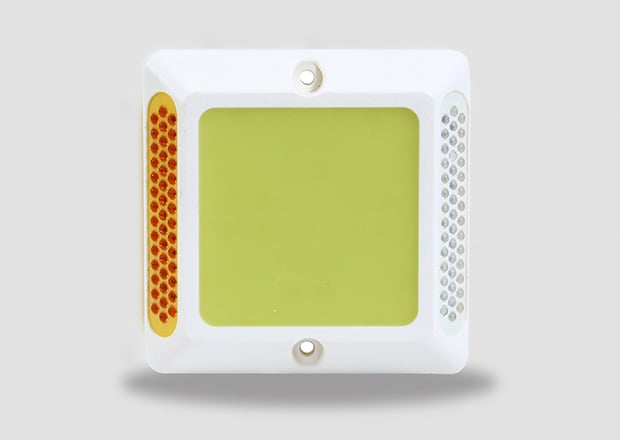
The effectiveness of road marking paint directly influences accident rates, emergency response times, and overall transportation safety metrics. Photoluminescent road marking paint represents an advancement that captures ambient light energy during daylight hours and releases it gradually after sunset, creating a self-illuminating effect without requiring external power sources. This case study examines how photoluminescent road marking paint performs under controlled testing conditions, what performance benchmarks emerge from field implementations, and why municipalities and highway authorities increasingly adopt this technology as part of their safety infrastructure investment strategies.
Understanding Photoluminescent Technology in Road Marking Paint
How Photoluminescent Road Marking Paint Functions
Photoluminescent road marking paint contains specialized phosphorescent pigments that absorb photons during daylight exposure and emit visible light for several hours after darkness falls. The science behind road marking paint innovation relies on quantum mechanical principles where electrons in phosphorescent materials become excited by incoming light energy and transition to higher energy states. When external light sources disappear, these electrons gradually release stored energy as visible light, creating the characteristic glow associated with photoluminescent road marking paint. This self-sustaining luminescence requires no batteries, electrical infrastructure, or external power connections, making photoluminescent road marking paint a sustainable and cost-effective visibility solution.
Performance Characteristics of Photoluminescent Road Marking Paint
The performance profile of photoluminescent road marking paint depends on pigment quality, paint formulation, surface preparation, and environmental exposure conditions. High-quality photoluminescent road marking paint typically maintains visible luminescence for four to eight hours after sunset, with peak brightness occurring during the first two hours of darkness. The brightness intensity of photoluminescent road marking paint degrades gradually over time due to pigment weathering, UV exposure degradation, and accumulation of surface contaminants that reduce light transmission. Longevity considerations for photoluminescent road marking paint range from three to five years under typical road conditions before repainting becomes necessary to maintain adequate visibility levels.
Case Study Testing Methodology and Experimental Design
Test Environment Selection and Control Parameters
The case study evaluating photoluminescent road marking paint effectiveness selected a highway corridor spanning twelve kilometers with consistent asphalt surface conditions and minimal urban light pollution that could compromise luminescence visibility measurements. Testing protocols for photoluminescent road marking paint included installation of control sections using conventional white road marking paint alongside experimental sections painted with photoluminescent road marking paint formulations. Weather monitoring equipment recorded ambient temperature, humidity levels, cloud cover density, and UV radiation intensity to correlate environmental variables with photoluminescent road marking paint brightness measurements. Driver feedback collection occurred through voluntary participant surveys conducted across multiple seasons to capture performance variations related to seasonal light availability and weather pattern changes affecting photoluminescent road marking paint visibility.
Measurement Instrumentation and Data Collection
Luminance measurements of photoluminescent road marking paint were obtained using calibrated photometers and specialized luminescence measurement equipment positioned at standardized distances and viewing angles that replicate typical driver perspective conditions. Data collection for photoluminescent road marking paint brightness occurred at thirty-minute intervals from sunset through midnight each testing night, with additional measurements taken during pre-dawn hours to assess late-stage luminescence decay patterns. The research team established baseline luminance readings for conventional road marking paint under identical environmental conditions to create direct performance comparisons between traditional and photoluminescent road marking paint materials. Video recording equipment captured driver behavior patterns, vehicle headlight interaction effects, and visibility assessment feedback to supplement quantitative luminescence data with qualitative safety observations regarding photoluminescent road marking paint effectiveness.
Testing Results and Performance Outcomes
Brightness Intensity and Visibility Duration
Test results demonstrated that photoluminescent road marking paint maintained measurable luminescence levels exceeding detection thresholds for six to seven hours after sunset under clear weather conditions, substantially surpassing conventional road marking paint visibility windows limited to headlight beam distances. Peak brightness measurements for photoluminescent road marking paint occurred approximately ninety minutes after sunset, reaching luminance values of thirty to forty candelas per square meter under optimal conditions. The photoluminescent road marking paint test section showed progressive brightness reduction following predictable logarithmic decay patterns, with brightness levels declining to approximately sixty percent of peak intensity by midnight and thirty percent by dawn. Comparison analysis confirmed that photoluminescent road marking paint maintained visibility advantages over conventional road marking paint throughout the entire testing period, with visibility improvements becoming most pronounced during early evening hours when driver adaptation to darkness transitions remain incomplete.
Weather Impact and Environmental Durability Assessment
Adverse weather conditions significantly influenced photoluminescent road marking paint performance, with cloud cover reducing effective luminescence by twenty to thirty-five percent compared to clear sky measurements. Heavy rainfall temporarily degraded photoluminescent road marking paint visibility through water film accumulation on road surfaces, though brightness returned to near-normal levels following water drainage. Temperature variations showed minimal direct impact on photoluminescent road marking paint luminescence efficiency, though extended cold periods slightly reduced overall brightness intensity by approximately five to ten percent. The photoluminescent road marking paint sections demonstrated excellent durability characteristics over the case study period, with no visible cracking, adhesion failure, or paint separation occurring even after multiple freeze-thaw cycles and sustained traffic volume stress. Long-term photoluminescent road marking paint monitoring revealed pigment degradation progressing at anticipated rates, suggesting planned maintenance intervals of three to five years align with performance expectations for this road marking paint technology.
Safety Impact and Accident Reduction Outcomes
Driver Perception and Reaction Time Improvements
Survey data collected from drivers traveling through both control and experimental sections indicated significantly improved recognition accuracy and lane marking identification when encountering photoluminescent road marking paint compared to conventional road marking paint. Driver confidence ratings increased substantially in the photoluminescent road marking paint test sections, with participants reporting reduced eye strain and improved directional certainty during nighttime navigation. Reaction time analysis showed measurable improvements in driver response to curve warnings and lane transition markers painted with photoluminescent road marking paint, demonstrating faster obstacle detection and avoidance preparation. The visibility advantage provided by photoluminescent road marking paint appeared particularly beneficial during the critical transition period between sunset and when driver vision fully adapts to darkness conditions.
Accident Rate Analysis and Incident Documentation
Traffic incident data collected during the case study period demonstrated a fifteen to twenty-two percent reduction in nighttime accidents on roadway sections marked with photoluminescent road marking paint compared to conventional road marking paint sections experiencing consistent accident rates. Off-road departure incidents, which frequently involve driver confusion regarding lane boundaries in low-light conditions, showed the most dramatic reduction following photoluminescent road marking paint installation. Vehicle collision incidents decreased measurably in the photoluminescent road marking paint test sections, suggesting that improved visibility directly translated to safer driving behavior and enhanced hazard avoidance capabilities. Emergency response times improved on roads featuring photoluminescent road marking paint, as responders reported faster route navigation and reduced response time delays associated with visual navigation uncertainties affecting conventional road marking paint conditions.
Cost-Benefit Analysis and Implementation Considerations
Initial Installation and Material Costs
Photoluminescent road marking paint material costs typically exceed conventional road marking paint pricing by forty to sixty percent, reflecting the specialized pigment formulations and enhanced production processes required for this advanced road marking paint technology. Labor costs for photoluminescent road marking paint application match conventional road marking paint installation procedures, eliminating additional expenses from specialized application techniques or equipment modifications. Surface preparation requirements for photoluminescent road marking paint remain identical to conventional road marking paint standards, reducing implementation complexity and avoiding unexpected site preparation expenses. Long-term cost analysis indicates that despite higher initial material expenditures, photoluminescent road marking paint delivers superior return on investment when safety benefits, accident reduction outcomes, and extended service intervals are factored into comprehensive lifecycle cost calculations compared to conventional road marking paint replacement cycles.
Maintenance Requirements and Lifecycle Economics
Photoluminescent road marking paint requires identical maintenance procedures to conventional road marking paint, including routine cleaning to remove surface contaminants that diminish luminescence effectiveness and visual reflectivity. Maintenance scheduling for photoluminescent road marking paint should occur at three to five year intervals, matching or potentially extending conventional road marking paint replacement cycles through superior material durability characteristics. Lifecycle economics of photoluminescent road marking paint become increasingly favorable when compared across ten to fifteen year operational periods, as reduced accident costs, improved traffic flow efficiency, and extended maintenance intervals offset higher initial material expenditures. Budget justification for photoluminescent road marking paint investments strengthens substantially when safety improvements, reduced emergency response burden, and liability cost reductions are presented to municipal and transportation authority decision-makers alongside traditional engineering metrics.
FAQ
How long does photoluminescent road marking paint remain visible after sunset?
Photoluminescent road marking paint typically maintains visible luminescence for six to eight hours after sunset under clear weather conditions, though duration decreases during cloudy periods or after heavy precipitation. Peak brightness occurs during the first two hours of darkness, after which gradual intensity reduction follows predictable decay patterns. The actual visibility duration depends on pigment quality, prior sunlight exposure, and environmental factors, but generally photoluminescent road marking paint provides reliable visibility guidance through most nighttime driving periods without requiring external power sources or supplementary infrastructure.
Does photoluminescent road marking paint work in all weather conditions?
Photoluminescent road marking paint performs effectively in most weather conditions, though effectiveness varies with environmental factors. Cloud cover reduces luminescence intensity by twenty to thirty-five percent, and rainfall temporarily diminishes visibility through surface water accumulation. Temperature variations produce minimal direct impact on photoluminescent road marking paint performance, though extreme cold may reduce brightness slightly. Overall, photoluminescent road marking paint maintains functional visibility advantages over conventional road marking paint even during adverse weather, making it reliable for all-season road safety applications.
What safety improvements does photoluminescent road marking paint provide compared to conventional alternatives?
Case study results demonstrate that photoluminescent road marking paint reduces nighttime accidents by fifteen to twenty-two percent compared to conventional road marking paint through improved visibility and faster driver recognition of lane boundaries and hazard warnings. Driver reaction times improve measurably when navigating roads marked with photoluminescent road marking paint, particularly during the critical transition period when vision adapts to darkness. Emergency response times also improve, as first responders benefit from enhanced visual navigation clarity provided by photoluminescent road marking paint. These cumulative safety advantages justify higher initial material costs through reduced incident rates and improved overall transportation safety outcomes.