EN
EN



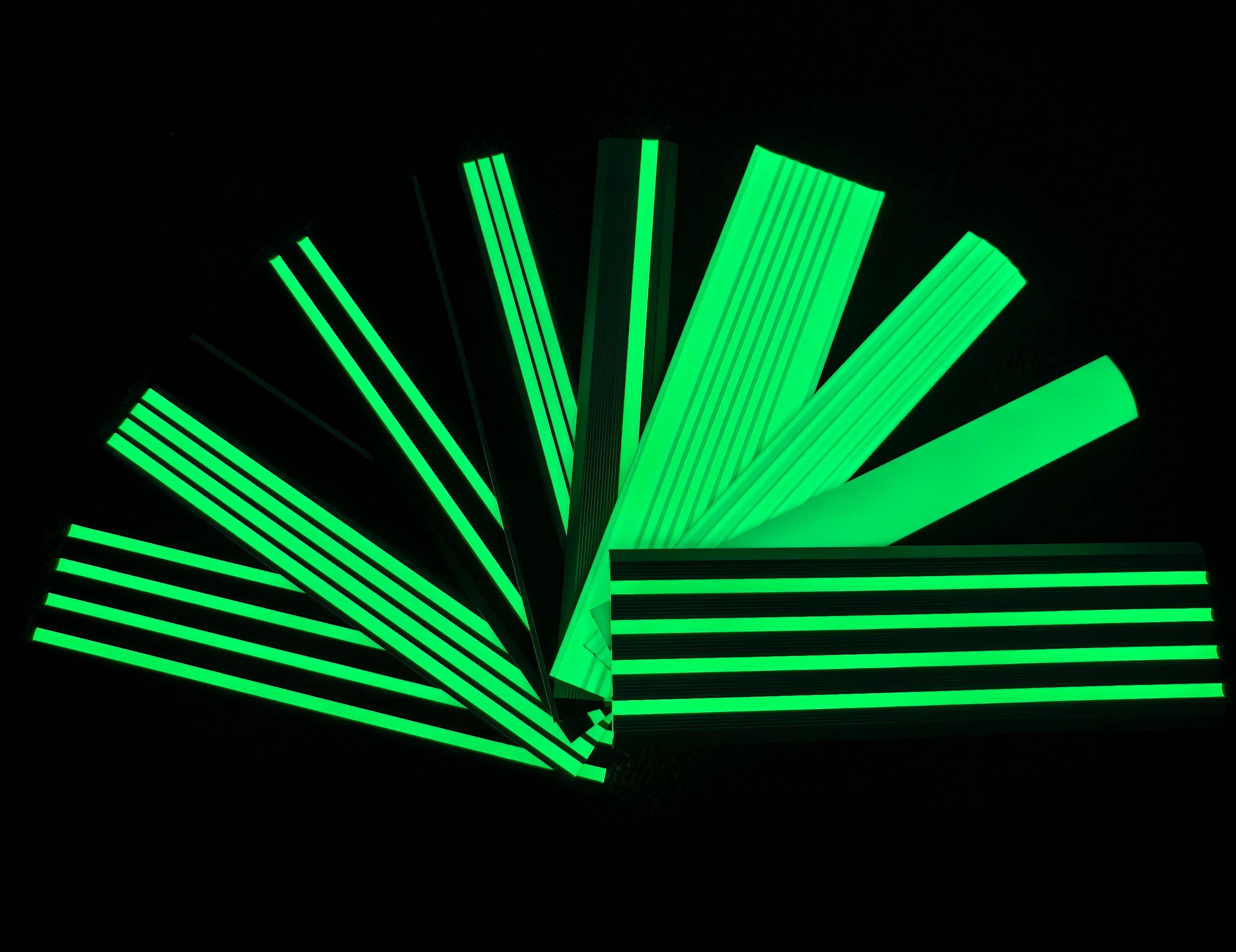
Stair safety is one of the most scrutinized aspects of building design in both commercial and public construction. Falls on staircases remain among the most common causes of serious injury in workplaces, public facilities, and residential buildings alike. As regulatory bodies continue to tighten their requirements around emergency egress and low-light visibility, photoluminescent stair nosing has become a critical compliance solution for architects, facility managers, and building code officers seeking reliable stair edge identification that performs even when power is lost.
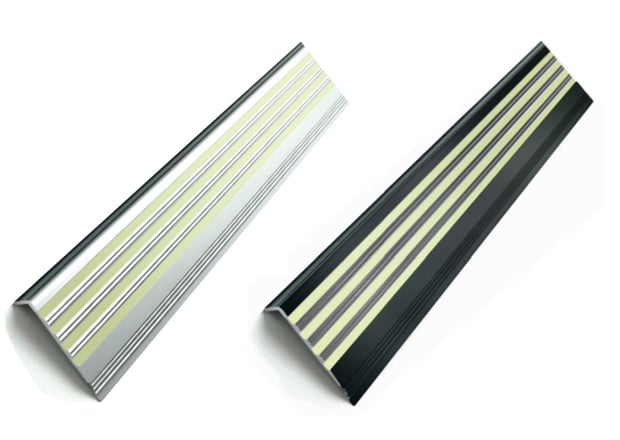
Understanding the exact building code standards that govern stair nosing—and how photoluminescent stair nosing satisfies those standards—is essential before specifying or installing any product. This article walks through the regulatory framework, the performance criteria that photoluminescent stair nosing must meet, and how to approach compliance across different building types and jurisdictions. Whether you are retrofitting an existing structure or specifying materials for new construction, getting the details right from the start prevents costly rework and, more importantly, protects the people who use the building.
Why Building Codes Mandate Stair Nosing in the First Place
The Risk Profile of Stair Edges
Stair nosings serve one fundamental purpose: making the leading edge of each step clearly visible and physically distinct from the tread surface behind it. In dim corridors, stairwells, or during power outages and emergency evacuations, the human eye struggles to gauge depth differences between steps. Without a contrasting edge marker, occupants misjudge foot placement, leading to trips, falls, and serious injuries. Building codes respond to this documented risk by requiring that stair nosing provide both a visual contrast and, in many cases, a non-slip surface texture.
Photoluminescent stair nosing addresses both requirements simultaneously. During normal lighting conditions, the nosing strip provides the contrast needed to distinguish step edges. When ambient light is removed—such as during a power failure in an emergency—the glow-in-the-dark properties of photoluminescent stair nosing allow occupants to identify stair edges without relying on any electrical backup system. This dual functionality makes it one of the few passive safety solutions that exceeds the baseline requirements of most current codes.
How Code Development Has Evolved Around Luminescent Safety
Building code evolution over the past two decades has shown a clear shift toward passive safety systems. After high-profile emergency evacuations highlighted the vulnerability of electrically powered signage and lighting, regulatory bodies including the International Building Code (IBC), the Life Safety Code (NFPA 101), and various regional codes began incorporating explicit provisions for photoluminescent materials in egress paths. Photoluminescent stair nosing moved from a recommended enhancement to a specified requirement in a growing number of occupancy categories.
Today, codes such as IBC Section 1025 and NFPA 101 Chapter 7 include language that either mandates or strongly incentivizes photoluminescent path marking systems, of which photoluminescent stair nosing forms a central element. The trajectory of code development strongly suggests that jurisdictions not yet requiring photoluminescent stair nosing will adopt such requirements in future revision cycles, making early adoption a sound long-term compliance investment.
Key Code Standards That Govern Photoluminescent Stair Nosing
International Building Code and IFC Requirements
The International Building Code is the most widely adopted model building code in the United States and serves as a reference framework in many international jurisdictions as well. IBC Section 1025 specifically addresses photoluminescent exit path markings and requires that in certain high-rise and assembly occupancies, egress stairways be equipped with continuous photoluminescent markings that include stair tread nosings. The code stipulates that these markings must be installed on the horizontal leading edge of each tread and must meet the photometric performance standards set out in UL 1994.
Importantly, the IBC specifies that photoluminescent stair nosing must be capable of providing identifiable glow after a minimum charging period under ambient light and must maintain sufficient luminance for a defined duration after light removal. These requirements ensure that photoluminescent stair nosing is not merely decorative but genuinely functional in the evacuation scenarios it is meant to support. Building officials evaluating compliance will look for product certifications and test data confirming these performance thresholds.
NFPA 101 Life Safety Code Provisions
NFPA 101, known as the Life Safety Code, is adopted in many jurisdictions as a complement or alternative to the IBC, particularly for occupied facilities such as healthcare buildings, educational institutions, and places of assembly. Chapter 7 of NFPA 101 addresses means of egress in detail, and recent editions have incorporated requirements for marking systems in enclosed stairways that align closely with the IBC's language on photoluminescent stair nosing.
Under NFPA 101, photoluminescent stair nosing must be installed at a specified width—typically a minimum of one inch in the direction perpendicular to the leading edge—and must extend across the full width of the tread. This ensures that occupants approaching from any angle can detect the stair edge. The code also addresses the relationship between photoluminescent stair nosing and overhead emergency lighting, clarifying that photoluminescent systems are intended to supplement rather than replace other required emergency lighting under most occupancy categories.
UL 1994 and ASTM E2072 Performance Standards
Beyond the building codes themselves, photoluminescent stair nosing must meet product-level performance standards to be considered code-compliant. UL 1994 is the primary standard in North America governing luminous egress path marking systems. It defines minimum photoluminescent brightness, the duration for which glow must be maintained, and the charging conditions under which performance must be demonstrated. A product carrying UL 1994 listing provides installers and code officials with documented assurance that the photoluminescent stair nosing will perform as required.
ASTM E2072 is a complementary standard that establishes test methods for measuring the photoluminescent performance of safety markings, including stair nosings. Together, these standards create a measurable, reproducible framework for evaluating whether a given photoluminescent stair nosing product will deliver the visibility needed in emergency conditions. When specifying products, procurement professionals and facility managers should verify that the photoluminescent stair nosing they select carries current certification to these standards, not merely the manufacturer's own claims.
Physical Installation Requirements for Code Compliance
Dimensions, Placement, and Coverage
Code compliance for photoluminescent stair nosing is not only about the material's photometric properties. The physical installation must also meet specific dimensional and placement requirements. Most codes require that photoluminescent stair nosing be installed with the luminescent face flush with or slightly above the tread surface, positioned at the leading edge so that it is visible from above as an occupant descends and from below as they ascend. The nosing must not create a tripping hazard itself, which is why many specifications reference a maximum height for any raised edge.
Width requirements vary by code and occupancy type. A common specification is that photoluminescent stair nosing cover a minimum of one inch measured back from the nosing edge across the tread, though some jurisdictions require wider coverage for high-occupancy or high-risk applications. The strip must also extend across the full horizontal width of the tread without gaps, ensuring complete edge demarcation regardless of an occupant's lateral position on the staircase.
Substrate Compatibility and Adhesion Standards
Photoluminescent stair nosing is manufactured for installation on a wide range of substrates, including concrete, steel, aluminum, vinyl, ceramic tile, and various composite materials used in modern construction. Code compliance requires not only that the nosing strip itself meet performance standards but that the installation method ensures secure adhesion or mechanical fastening across the expected service life of the building. Loose or debonded nosing strips present both a safety hazard and an immediate code violation.
Installers should follow manufacturer-specified surface preparation requirements carefully, including substrate cleaning, priming where required, and the use of specified adhesives or fasteners. For high-traffic commercial and institutional environments, mechanically fastened photoluminescent stair nosing—where the substrate allows—typically offers greater long-term durability and more predictable compliance maintenance compared to adhesive-only systems. Local code officials and authority having jurisdiction (AHJ) may have specific requirements about installation method documentation as part of the project record.
Applying Photoluminescent Stair Nosing Across Different Building Types
High-Rise Office and Commercial Buildings
High-rise commercial buildings represent the environment most commonly associated with photoluminescent stair nosing requirements. These buildings house large numbers of occupants, often operate complex egress systems, and face the highest consequence scenarios in emergency evacuation. IBC Section 1025, which explicitly applies to buildings above a defined floor height threshold, mandates photoluminescent path marking in enclosed stairways, and most high-rise projects now treat photoluminescent stair nosing as a standard specification item rather than a value-added option.
For commercial projects, the specification of photoluminescent stair nosing typically occurs at the design development stage, with final product selection confirmed during the construction documents phase. Building owners and general contractors benefit from confirming product certifications early, as substituting non-compliant products late in a project creates both schedule risk and liability exposure. Coordinating with the AHJ early in the design process can also clarify whether local amendments to the IBC affect the specific photoluminescent stair nosing requirements that apply.
Healthcare, Educational, and Hospitality Facilities
Healthcare facilities, schools, and hotels each present distinct compliance contexts for photoluminescent stair nosing. Healthcare buildings are frequently governed by both NFPA 101 and state-level health department codes, and the requirements for egress marking in these environments tend to be stricter due to the presence of mobility-impaired occupants and the critical nature of evacuation scenarios. Photoluminescent stair nosing in healthcare settings must often demonstrate compliance with additional surface cleanability and chemical resistance requirements, given the cleaning protocols used in clinical environments.
Educational buildings and hospitality facilities typically fall under IBC and NFPA 101 requirements depending on the jurisdiction, but the practical application of photoluminescent stair nosing in these settings is often driven by insurance underwriters and institutional risk management programs as much as by strict code mandate. In these cases, photoluminescent stair nosing serves as a documented risk mitigation measure, which can influence liability outcomes and insurance terms. Facility managers in these sectors should document installation details, product certifications, and maintenance records to support ongoing compliance verification.
Industrial and Warehouse Environments
Industrial facilities, warehouses, and manufacturing plants present a different but equally important context for photoluminescent stair nosing compliance. OSHA regulations in the United States, including standards under 29 CFR 1910 and 29 CFR 1926, address stair safety in general industry and construction environments. While OSHA standards do not always explicitly reference photoluminescent stair nosing by name, the performance requirements for stair edge visibility and emergency egress marking are compatible with and often best met by photoluminescent solutions.
In industrial settings, photoluminescent stair nosing must also contend with heavier physical loads, exposure to oils, chemicals, and abrasive materials, and potentially higher-frequency use than commercial stairways. This makes substrate compatibility and product durability particularly important selection criteria. Industrial-grade photoluminescent stair nosing products are typically designed with harder wearing surfaces and more robust fastening systems specifically to address these demands while continuing to meet the photoluminescent performance requirements that underpin code compliance.
Maintaining Compliance Over the Life of the Building
Inspection and Replacement Protocols
Achieving initial code compliance with photoluminescent stair nosing is only part of a facility manager's obligation. Building codes and NFPA standards typically require that egress path marking systems, including photoluminescent stair nosing, be maintained in functional condition throughout the life of the building's occupancy. This means establishing a regular inspection protocol to check for physical damage, debonding, surface contamination, and any reduction in luminescent performance due to aging or coating degradation.
Most manufacturers of photoluminescent stair nosing recommend annual inspection at minimum, with more frequent checks in high-traffic or harsh-environment installations. When damage is identified, replacement should occur promptly to maintain continuous code compliance. Keeping records of inspection dates, findings, and any remediation actions taken provides documentation that can be critical during building inspections, insurance audits, or incident investigations.
The Role of Ambient Light Conditions in Ongoing Performance
The performance of photoluminescent stair nosing is directly dependent on adequate charging from ambient light sources. In stairwells where light levels are low or where the stair nosing is obscured by shadows or furniture placement, the photoluminescent material may not charge sufficiently to perform to its rated luminance specifications. This creates a compliance gap that is easy to overlook because the nosing may appear physically intact while its functional performance has degraded below code-required thresholds.
Facility managers should evaluate the lighting environment of all stairways equipped with photoluminescent stair nosing and ensure that ambient illumination meets the minimum charging levels specified by the product standard and the manufacturer. In some cases, repositioning or upgrading stairwell lighting fixtures is necessary to maintain compliant photoluminescent performance. This integration of lighting design and photoluminescent product specification is a detail that code consultants and life safety engineers increasingly address explicitly in their project documentation.
FAQ
Is photoluminescent stair nosing required in all buildings?
Not universally, but the requirement is broad and expanding. The IBC mandates photoluminescent stair nosing in high-rise buildings and certain assembly occupancies. NFPA 101 applies it in many institutional and public buildings. Low-rise residential construction typically does not face mandatory requirements, though photoluminescent stair nosing may still be specified voluntarily for liability management and safety enhancement. The applicable requirements depend on building height, occupancy classification, and local code adoption status, so consulting the AHJ is always advisable for a specific project.
What certifications should photoluminescent stair nosing carry to be code compliant?
In North America, the primary certification is UL 1994, which covers the luminous performance of egress path marking systems. Products meeting ASTM E2072 test methodology provide additional documented evidence of photoluminescent performance. Some jurisdictions may also recognize products certified to ISO 16069 or DIN 67510 for international projects. Always verify that the certification is current and that the listed product configuration matches the specific photoluminescent stair nosing product being installed, as certifications apply to tested configurations and materials.
Can photoluminescent stair nosing replace emergency lighting systems?
No. In the large majority of building code contexts, photoluminescent stair nosing is classified as a supplemental egress marking system rather than a substitute for emergency lighting. Codes that require photoluminescent marking in stairwells typically do so in addition to, not instead of, electrically powered emergency lighting. The value of photoluminescent stair nosing lies in its passive reliability—it continues to function even if the emergency lighting system fails—but it does not eliminate the need for code-required electrical emergency lighting in most occupancy categories.
How long does photoluminescent stair nosing retain its glow after being charged?
UL 1994 requires that listed photoluminescent egress path marking systems, including photoluminescent stair nosing, provide identifiable luminance for a minimum of 90 minutes after light removal following a standard charging period. Many products exceed this minimum and maintain visible glow for several hours. The actual performance depends on the luminescent material quality, the intensity of the ambient light used for charging, and the duration of the charging period. Specifiers should review the photometric test data provided with each product to understand its specific performance profile under conditions representative of the installation environment.
Table of Contents
- Why Building Codes Mandate Stair Nosing in the First Place
- Key Code Standards That Govern Photoluminescent Stair Nosing
- Physical Installation Requirements for Code Compliance
- Applying Photoluminescent Stair Nosing Across Different Building Types
- Maintaining Compliance Over the Life of the Building
- FAQ