EN
EN




When emergency situations arise in buildings, the ability to locate exits quickly can mean the difference between safety and disaster. Glow-in-the-dark exit signs provide continuous visibility even during complete power failures, making their strategic placement critical for occupant safety. Understanding where to install these photoluminescent safety devices ensures they deliver maximum effectiveness when needed most, guiding people to safety through smoke-filled corridors, darkened stairwells, and unfamiliar building layouts.
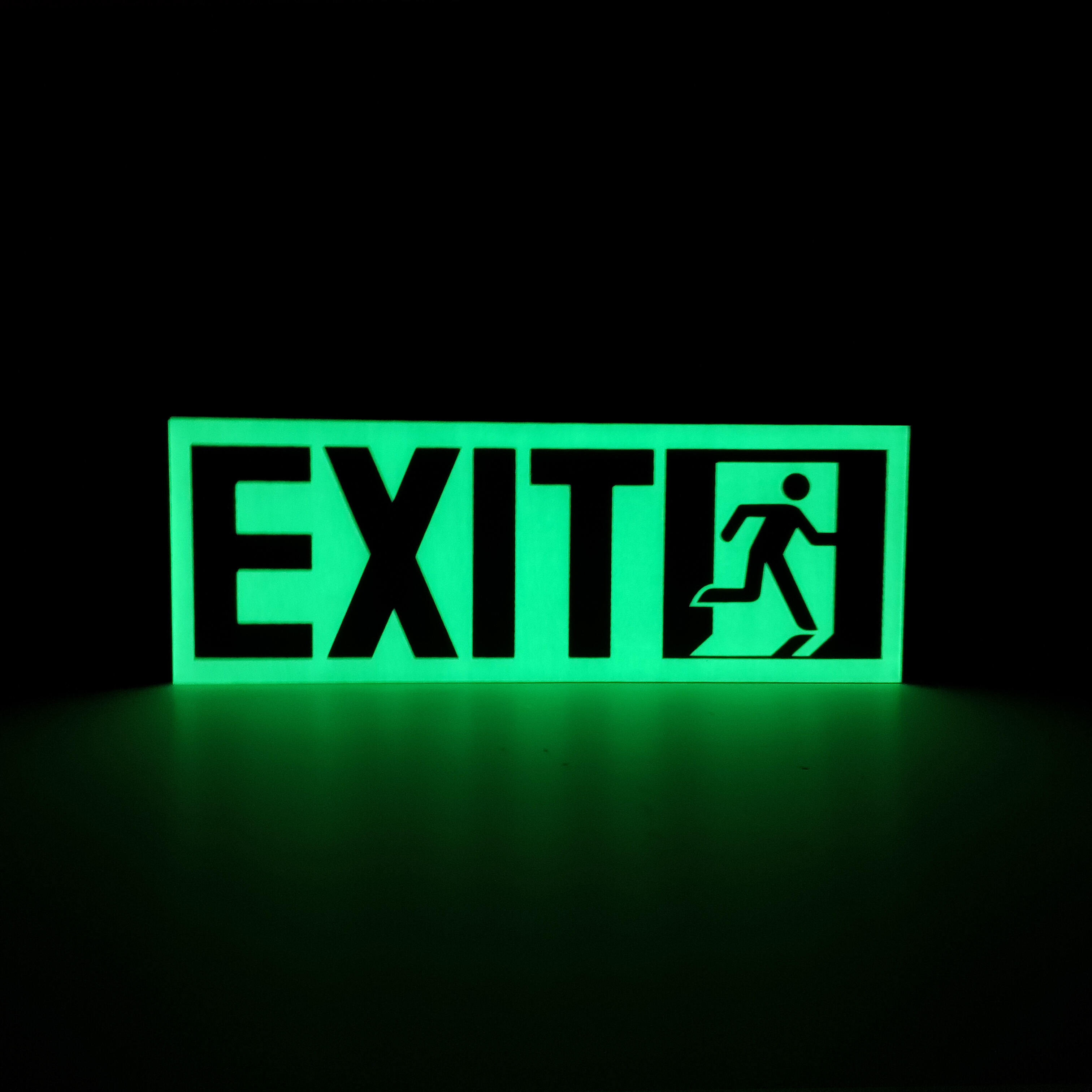
The effectiveness of glow-in-the-dark exit signs depends heavily on their installation locations, viewing angles, and surrounding environmental factors. Building codes and safety standards provide baseline requirements, but optimal placement goes beyond mere compliance to create intuitive wayfinding systems that work under the most challenging conditions. This comprehensive guide explores the best installation locations for photoluminescent exit signs across various building types, explaining the reasoning behind each placement decision and how proper positioning enhances visibility during emergencies.
Primary Exit Door Locations and Immediate Surrounding Areas
Directly Above Exit Door Frames
The most critical placement for glow-in-the-dark exit signs is directly above exit door frames, where they serve as the final visual confirmation for evacuating occupants. This location ensures the signs remain visible even when doors are partially obscured by smoke or when people are moving quickly through congested spaces. The recommended mounting height is between six and eight feet above the finished floor, positioning the sign within the natural sight line of both standing adults and children while remaining above typical smoke layers that accumulate during fires.
Installing glow-in-the-dark exit signs at this primary location requires attention to door swing direction and architectural obstructions. The sign should be centered above the door whenever possible, but when architectural features like headers or sprinkler systems create conflicts, slight offset positioning is acceptable as long as the sign remains clearly associated with its corresponding exit. The mounting surface should be clean, flat, and positioned perpendicular to the primary approach direction to maximize the luminescent surface area visible to evacuating occupants.
Door-mounted glow-in-the-dark exit signs must also account for door operation patterns in high-traffic areas. In locations where doors frequently remain open during business hours, additional consideration should be given to whether the sign remains visible when the door is in its open position. Some installations benefit from dual-sided signs or supplementary directional indicators that maintain visibility regardless of door position, ensuring consistent emergency guidance throughout all operational states.
Exit Vestibule and Discharge Points
Beyond the immediate door threshold, glow-in-the-dark exit signs should mark vestibules and final discharge points where occupants transition from interior spaces to exterior safety zones. These transitional areas often feature multiple doors, security barriers, or architectural configurations that can create confusion during evacuations. Photoluminescent signs in these locations confirm that evacuees are following the correct path and prevent them from mistakenly entering mechanical rooms, storage areas, or other non-exit spaces adjacent to legitimate exits.
The installation of glow-in-the-dark exit signs in vestibules should account for the reduced ambient lighting typically found in these transition zones. Since photoluminescent materials require light exposure to charge, signs in vestibules with limited windows or minimal artificial lighting may need enhanced charging sources or should be positioned where available light sources can maintain their luminescent properties. This consideration becomes particularly important in below-grade exits, parking garage discharge points, and other locations where natural light penetration is minimal throughout normal operating hours.
Exit discharge corridors leading away from buildings also benefit from strategically placed glow-in-the-dark exit signs that guide evacuees to designated assembly areas or away from potential hazards near the building exterior. These exterior signs should be weather-resistant and positioned to remain visible during nighttime evacuations, severe weather conditions, and situations where exterior lighting systems may be compromised. The continuity of photoluminescent guidance from interior spaces through to exterior safety zones creates a seamless wayfinding experience that reduces hesitation and confusion during critical moments.
Alternative Exit Identification in Multi-Exit Rooms
Large occupancy spaces with multiple exit options require glow-in-the-dark exit signs at each available exit to ensure occupants can identify the nearest escape route regardless of their position within the room. Assembly areas, open-plan offices, retail spaces, and industrial facilities often feature several exits distributed around the perimeter, and each must be clearly marked with photoluminescent signage. The visibility of these signs from all points within the space becomes a critical design factor, particularly in areas with tall equipment, storage racks, or other visual obstructions.
When installing glow-in-the-dark exit signs in multi-exit environments, consider the sight line analysis from various occupant positions throughout the space. High-bay facilities may require additional mounting height to ensure signs remain visible over machinery or inventory, while open office environments might benefit from lower mounting positions that align with typical seated and standing sight lines. The goal is to ensure that anyone entering the space can immediately identify at least two available exits, supporting the fundamental principle of redundant egress paths in emergency planning.
Corridor and Hallway Strategic Positioning
Changes in Direction and Corridor Intersections
Corridors that change direction present decision points where evacuating occupants need clear guidance about which path leads to safety. Installing glow-in-the-dark exit signs at every change of direction ensures continuous wayfinding throughout complex building layouts, preventing evacuees from wandering into dead-end corridors or areas that lead away from exits. These directional signs should include arrows or other indicators that clearly communicate the correct travel path, complementing the simple exit identification signs mounted at door locations.
Corridor intersections require particularly careful consideration when positioning glow-in-the-dark exit signs because occupants approaching from different directions need consistent guidance toward the nearest safe exit. T-intersections, four-way intersections, and irregular junction points should feature signs visible from all approach directions, with directional indicators oriented to guide traffic flow toward appropriate exits. The spacing of these intersection signs should follow building code requirements, typically mandating visible signage at intervals not exceeding 100 feet along the path of egress travel.
The mounting height for corridor glow-in-the-dark exit signs deserves special attention in environments where smoke accumulation is a concern. While exit door signs are typically mounted above door height, corridor directional signs may benefit from lower mounting positions around six feet above the floor, placing them below the typical smoke layer that forms during fire events. This lower positioning keeps the signs visible even when visibility at ceiling height becomes severely compromised, though local codes and specific building characteristics should inform the final mounting height decision for each installation.
Dead-End Corridor Warning and Redirection
Dead-end corridors present significant hazards during evacuations because occupants may waste critical time traveling in wrong directions before discovering they must backtrack to reach exits. Glow-in-the-dark exit signs installed at dead-end corridor entrances should clearly indicate that the corridor does not lead to an exit, using specific signage that prevents evacuees from making this costly navigation error. These warning signs become particularly important in buildings with irregular layouts, renovated structures where former exits have been eliminated, or facilities with corridors serving equipment rooms and other non-public spaces.
Complementing dead-end warnings, glow-in-the-dark exit signs at the termination points of these corridors should provide clear redirection information guiding occupants back toward legitimate exits. The combination of entrance warnings and terminal redirection creates a safety net that catches disoriented evacuees before they become trapped in areas far from exits. This dual-signage approach proves especially valuable in high-stress emergency situations where occupants may not process subtle environmental cues and require explicit, unmistakable guidance about safe travel directions.
Long Corridor Intermediate Marking
Extended corridors exceeding 100 feet in length require intermediate glow-in-the-dark exit signs that maintain continuous visibility of exit guidance throughout the egress path. These intermediate signs reassure evacuating occupants that they remain on the correct path and provide ongoing directional information in environments where disorientation can occur easily. The spacing of these signs should balance code compliance with practical visibility considerations, ensuring that at least one photoluminescent exit sign remains visible from any position along the corridor even in smoke-reduced visibility conditions.
Institutional facilities like hospitals, schools, and correctional facilities face unique challenges in corridor signage because these buildings often feature extremely long circulation paths serving numerous rooms. Installing glow-in-the-dark exit signs at regular intervals along these extended corridors creates a visual breadcrumb trail that helps occupants maintain orientation even when familiar landmarks become obscured. The regularity of sign spacing also aids emergency responders entering the building, providing them with consistent reference points as they navigate toward incident locations or conduct search and rescue operations.
Stairwell and Vertical Circulation Placement
Stairwell Entry Door Identification
Stairwell access points represent critical transition zones in multi-story buildings where horizontal circulation converts to vertical egress paths. Glow-in-the-dark exit signs at stairwell entry doors must be exceptionally prominent because these doors often remain closed during normal operations and may not be immediately recognizable as exit routes to building occupants unfamiliar with the layout. The signs should clearly identify the door as providing stairwell access and may include supplementary information about which floors the stairwell serves or whether it provides roof access in buildings where rooftop evacuation or rescue operations might occur.
In buildings with multiple stairwells, differentiation between stairwell locations becomes important for emergency planning and evacuation management. Glow-in-the-dark exit signs can incorporate letter or number designations that correspond to floor plans and evacuation procedures, helping occupants and emergency responders communicate clearly about locations and movements. This identification system proves particularly valuable in large commercial buildings, hospitals, and other complex facilities where multiple simultaneous evacuations might occur through different stairwells based on incident location and nature.
Within-Stairwell Directional Guidance
Once occupants enter stairwells, continued guidance through glow-in-the-dark exit signs ensures they travel in the correct direction toward ground-level discharge points. Stairwell landings should feature signs indicating floor levels, direction of travel toward exits, and whether the stairs continue beyond ground level to basement areas that might not provide direct exterior access. This internal stairwell signage prevents evacuees from becoming disoriented in the enclosed, often windowless stairwell environment where spatial orientation can deteriorate quickly under stress.
Glow-in-the-dark exit signs within stairwells face unique charging challenges because these enclosed spaces typically receive minimal natural light and may have limited artificial lighting during off-hours. The positioning of signs relative to stairwell lighting fixtures becomes critical, ensuring adequate light exposure during building occupancy to maintain luminescent charge throughout potential nighttime or power-failure emergencies. Some installations incorporate dedicated charging lights or position signs near exit door lights that remain illuminated continuously, guaranteeing consistent photoluminescent performance regardless of ambient lighting conditions.
Ground Level and Discharge Floor Marking
The most critical signage location within stairwells is the ground-level or designated discharge floor where evacuees should exit the stairwell to reach building exterior safety zones. Glow-in-the-dark exit signs at this location must be unmistakably clear, preventing the common evacuation error where occupants continue past the discharge floor into basement levels or remain in stairwells beyond necessary. Large, prominent signs using language like "EXIT TO OUTSIDE" or "GROUND LEVEL EXIT" provide explicit guidance that reduces ambiguity during high-stress evacuation scenarios.
Stairwell discharge doors themselves require robust glow-in-the-dark exit signs that remain visible even when the door is partially obscured by evacuating crowds. The mounting position should account for door swing direction and crowd flow patterns, ensuring the sign remains in sight lines even when dozens of people are simultaneously attempting to exit through the doorway. Additional floor-level or low-mounted signs may complement traditional overhead signage, providing visibility for occupants crawling beneath smoke or assisting others who may be at lower heights during evacuation.
Specialized Environment Installation Considerations
Industrial and Manufacturing Facility Positioning
Industrial environments present unique challenges for glow-in-the-dark exit signs due to high ceilings, large equipment installations, storage configurations, and environmental factors like dust, moisture, or chemical exposures. Exit signs in these facilities must be positioned with consideration for machinery layouts that may change over time, ensuring signs remain visible even as production lines are reconfigured or storage patterns shift. Elevated mounting positions that place signs above typical equipment heights help maintain long-term visibility, though this must be balanced against the need to keep signs within effective viewing distances for floor-level personnel.
Manufacturing facilities often benefit from supplementary low-level glow-in-the-dark exit signs that remain visible when overhead visibility becomes compromised by smoke, steam, or industrial processes. These low-mounted signs, positioned between two and four feet above the floor, create a secondary guidance system that proves especially valuable in heavy industrial settings where fires or chemical releases may create dense smoke conditions that rapidly obscure ceiling-mounted signage. The durability and environmental resistance of signs in these locations becomes paramount, requiring industrial-grade photoluminescent materials that withstand harsh conditions without degradation.
Healthcare Facility Critical Area Marking
Healthcare facilities require specialized approaches to glow-in-the-dark exit signs because evacuation procedures differ significantly from standard office or retail environments. Patient care areas, operating rooms, and intensive care units need exit signage that accounts for horizontal evacuation strategies where patients may be moved to adjacent fire compartments rather than immediately evacuating to building exteriors. Photoluminescent signs in these areas should clearly distinguish between compartment boundaries and final building exits, supporting the defend-in-place and phased evacuation strategies common in healthcare emergency planning.
Hospital corridors serving patient rooms face additional complexity because of the high volume of medical equipment, beds, and supply carts that may temporarily obstruct sight lines to glow-in-the-dark exit signs. Strategic positioning of signs at heights above typical equipment while remaining below ceiling-mounted mechanical systems ensures consistent visibility despite the dynamic nature of hospital environments. Dual-mounted signs at both traditional height and lower intermediate positions create redundancy that maintains guidance even when one sign becomes temporarily obscured by equipment or procedural activities.
Educational Institution Multi-Purpose Space Solutions
Educational facilities combine multiple occupancy types within single structures, requiring glow-in-the-dark exit signs that address varied spatial configurations and occupant characteristics. Classrooms, laboratories, gymnasiums, auditoriums, and cafeterias each present distinct visibility challenges and evacuation patterns. Gymnasium and auditorium spaces with high ceilings and large open areas benefit from multiple perimeter-mounted signs that remain visible from center floor positions, while classroom corridors require the standard interval-based placement that maintains continuous sight lines throughout circulation paths.
School environments also necessitate consideration for occupants of varying heights, ages, and mobility levels. Glow-in-the-dark exit signs should be positioned to accommodate both young children and adults, ensuring that elementary students can see and comprehend exit guidance as effectively as adult staff members. Some educational facilities incorporate dual-height signage systems with traditional overhead signs complemented by lower-mounted directional indicators at heights more appropriate for young children's sight lines, creating inclusive wayfinding systems that serve all building occupants effectively.
Environmental and Maintenance Factors Affecting Placement
Ambient Light Exposure and Charging Optimization
The fundamental operating principle of glow-in-the-dark exit signs requires adequate light exposure to charge the photoluminescent material, making the relationship between sign placement and light sources a critical installation consideration. Signs should be positioned where they receive regular exposure to natural or artificial light during normal building occupancy, ensuring they maintain full luminescent charge for emergency situations. South-facing corridors with window exposure provide excellent natural charging, while interior corridors depend on consistent artificial lighting during business hours to maintain sign performance.
Areas with inadequate ambient lighting may require supplementary dedicated charging lights positioned to illuminate glow-in-the-dark exit signs continuously or during occupied hours. These charging lights should be connected to emergency power systems when possible, ensuring signs receive charging even during extended power outages that might deplete their initial luminescent charge. The positioning of signs relative to existing lighting fixtures should be evaluated during installation planning, optimizing light exposure while avoiding positions where fixtures create shadows or insufficient illumination on sign surfaces.
Temperature and Environmental Stability Requirements
Extreme temperature environments affect photoluminescent material performance, influencing optimal placement decisions for glow-in-the-dark exit signs in specialized facilities. Cold storage areas, industrial freezers, and exterior-adjacent locations exposed to severe weather require signs rated for extended temperature ranges without performance degradation. Similarly, high-temperature environments near industrial processes, commercial kitchens, or mechanical equipment rooms need signs with thermal stability that maintains luminescent properties under sustained heat exposure.
Humidity and moisture exposure also impact glow-in-the-dark exit signs placement strategies, particularly in locations like locker rooms, pool facilities, or exterior-facing doorways where condensation and direct water contact may occur. Photoluminescent signs in these environments should feature waterproof or water-resistant construction with sealed edges preventing moisture penetration that could degrade the luminescent substrate or mounting adhesives. The mounting surface preparation becomes especially important in humid environments, requiring clean, dry installation conditions and potentially supplementary mechanical fastening beyond standard adhesive mounting methods.
Cleaning and Inspection Access Planning
Long-term effectiveness of glow-in-the-dark exit signs depends on regular cleaning to remove dust, dirt, and other surface contamination that blocks light absorption and reduces luminescent output. Installation positions should facilitate routine cleaning access without requiring extensive ladder work or disruption to building operations. Signs mounted at heights between six and eight feet allow maintenance personnel to clean surfaces using standard stepladders, while extremely high mounting positions in industrial facilities may necessitate lift equipment or specialized cleaning procedures that reduce maintenance frequency and increase long-term costs.
Inspection and testing requirements for photoluminescent exit signs also inform optimal placement decisions, ensuring compliance personnel can readily verify sign condition, luminescent performance, and continued adherence to safety standards. Mounting positions should allow clear visual inspection from floor level or with minimal equipment assistance, enabling quick verification during routine safety audits. Documentation of sign locations through floor plans and facility management systems supports systematic inspection programs that verify all required signs remain properly positioned, functional, and unobstructed throughout building lifecycles.
FAQ
How high should glow-in-the-dark exit signs be mounted above doorways?
Glow-in-the-dark exit signs should typically be mounted between six and eight feet above the finished floor when positioned above exit doorways, with the optimal height around seven feet for most applications. This positioning places signs within natural sight lines for adults and older children while elevating them above the typical smoke layer that forms during fire events. Local building codes may specify exact mounting heights based on jurisdiction and building classification, so always verify compliance requirements for specific installations. The mounting height should also account for door header clearances and any architectural features that might obstruct visibility from approach directions.
Can glow-in-the-dark exit signs work effectively in areas with limited natural light?
Yes, glow-in-the-dark exit signs can function effectively in areas with limited natural light provided they receive adequate artificial light exposure during building occupancy periods. Interior corridors, basement levels, and windowless spaces can maintain photoluminescent sign performance when artificial lighting remains on during business hours, allowing the signs to charge sufficiently for emergency visibility. In locations with minimal lighting exposure, dedicated charging lights or enhanced artificial lighting systems positioned near the signs ensure consistent performance. The key factor is cumulative light exposure over time rather than natural versus artificial light sources, making proper placement relative to existing lighting fixtures critical for reliable emergency performance.
How often do glow-in-the-dark exit signs need to be replaced or maintained?
Quality glow-in-the-dark exit signs typically maintain effective luminescent performance for ten to twenty-five years depending on material quality, environmental conditions, and light exposure patterns. Routine maintenance involves periodic cleaning to remove surface contamination that reduces light absorption, typically recommended every six to twelve months in normal environments and more frequently in dusty or industrial settings. Regular inspection should verify that signs remain securely mounted, unobstructed, and capable of producing adequate luminescence during darkness testing. Signs showing diminished glow duration, physical damage, or fading should be replaced promptly to maintain emergency egress system effectiveness, with replacement intervals documented as part of comprehensive facility safety management programs.
Do different building types require different placement strategies for photoluminescent exit signs?
Yes, different building types require customized placement strategies that account for specific occupancy characteristics, spatial configurations, and evacuation procedures. Office buildings typically follow standard corridor and exit door marking patterns, while healthcare facilities incorporate horizontal evacuation considerations and patient care area specializations. Industrial facilities need elevated mounting positions accounting for equipment and storage configurations, whereas retail environments require signs positioned for customer visibility despite merchandise displays and seasonal layout changes. Educational institutions must address multi-age occupants with varied sight lines and comprehension levels. Each building type benefits from placement strategies that reflect actual occupant behaviors, spatial challenges, and emergency response procedures specific to that facility classification, moving beyond generic code compliance to create truly effective emergency wayfinding systems.
Table of Contents
- Primary Exit Door Locations and Immediate Surrounding Areas
- Corridor and Hallway Strategic Positioning
- Stairwell and Vertical Circulation Placement
- Specialized Environment Installation Considerations
- Environmental and Maintenance Factors Affecting Placement
-
FAQ
- How high should glow-in-the-dark exit signs be mounted above doorways?
- Can glow-in-the-dark exit signs work effectively in areas with limited natural light?
- How often do glow-in-the-dark exit signs need to be replaced or maintained?
- Do different building types require different placement strategies for photoluminescent exit signs?