EN
EN



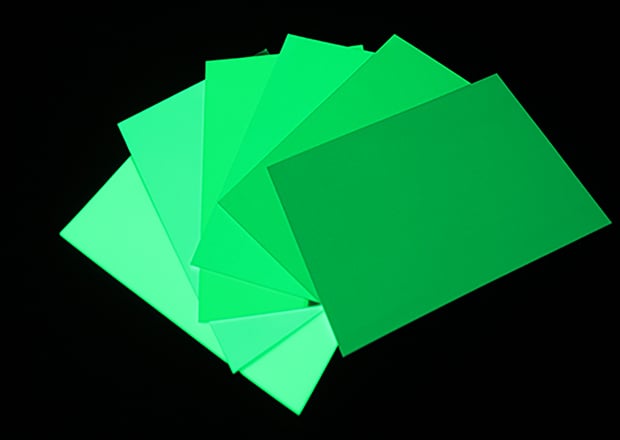
In the highly regulated world of industrial safety, choosing the right photoluminescent materials can be a complex task for procurement managers and safety engineers. Whether you are outfitting a commercial high-rise, a marine vessel, or a manufacturing plant, the physical architecture of your safety signage matters. A Photoluminescent Sheet serves as a critical component for emergency wayfinding, providing a reliable, unpowered glow when primary electrical systems fail. Understanding the nuances of material thickness, substrate grades, and performance tiers is essential to ensuring that your safety markings are not only compliant with international fire and building codes but also durable enough to withstand the specific environmental challenges of your facility.
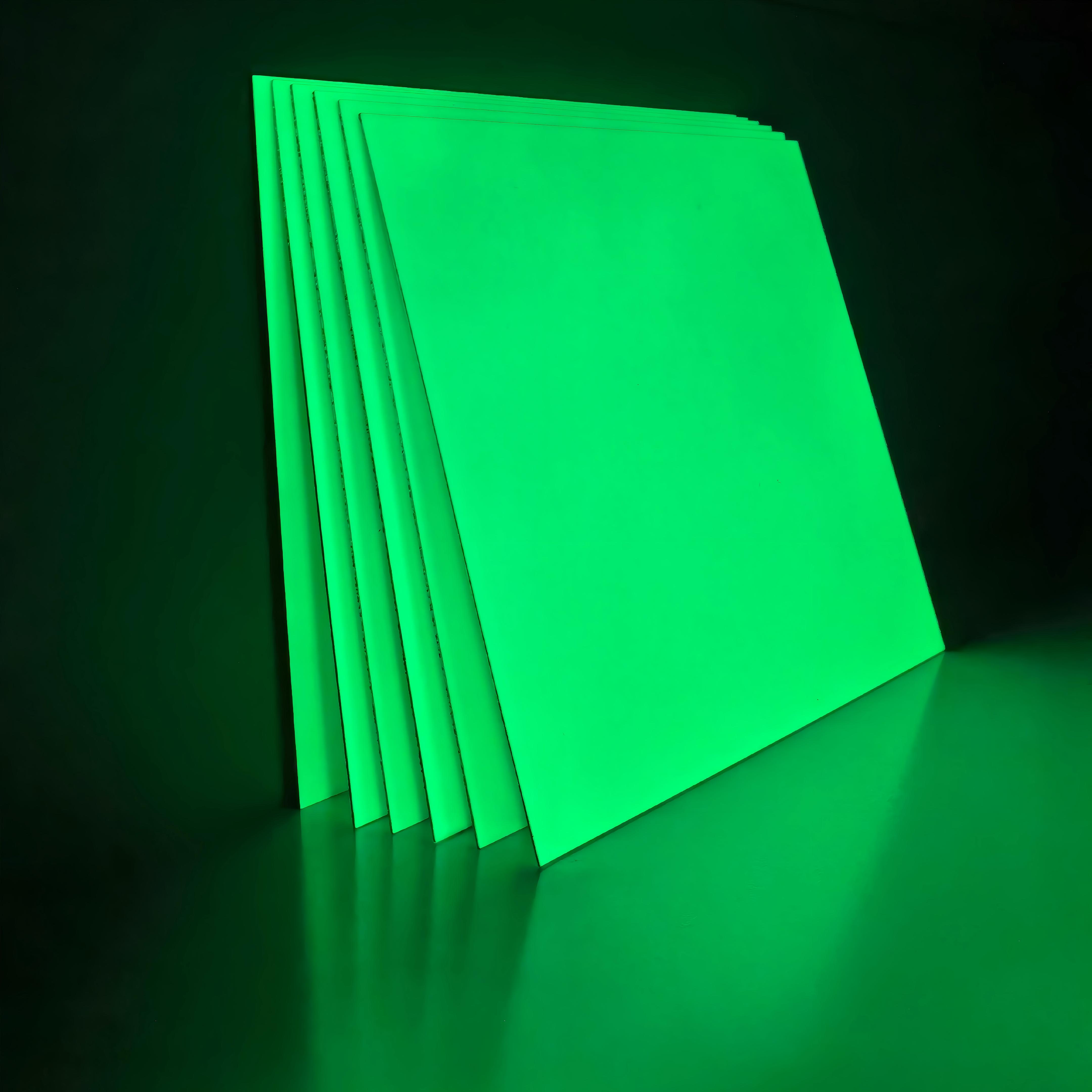
As a leading manufacturer specializing in phosphorescent technology, we understand that industrial buyers require more than just a product; they require a comprehensive solution that balances technical performance with budgetary constraints. Our enterprise provides an end-to-end manufacturing framework, delivering high-quality options that span a full range of prices from high to low. This guide aims to demystify the technical specifications of our inventory, helping you make an informed decision when ordering your next batch of safety materials.
Technical Advantages and Academic Collaboration
The baseline performance of any advanced light-storage product is dictated by its underlying chemical engineering. To ensure our materials remain at the forefront of the industry, our enterprise maintains a deep technical collaboration with prominent academic institutions, including the Zhejiang University of Technology. This partnership allows us to continually refine the molecular structure of our rare-earth aluminate crystals. By optimizing how these particles are synthesized and embedded into polymer matrices, we achieve superior energy storage efficiency.
Through this joint research framework, we offer comprehensive support across diverse application fields. Our engineering teams utilize these academic insights to assist clients with complex challenges, such as determining the ideal thickness for specific structural requirements or analyzing chemical resistance for volatile environments. This robust scientific foundation ensures that when you source a Photoluminescent Sheet from us, you are receiving a material backed by rigorous laboratory validation rather than generic manufacturing assumptions.
Product Advantages and Performance Metrics
A primary advantage of our product line is its diverse range of configurations tailored to specific operational environments. We design our materials to exhibit exceptionally high luminous brightness and a long luminous duration, ensuring that emergency paths remain visible for hours after a power outage. Furthermore, our films and sheets feature remarkably low excitation condition requirements. This means they do not need specialized UV charging systems; they can reach an optimal state of charge under standard indoor LED lighting, fluorescent bulbs, or indirect daylight.
We categorize our inventory into distinct performance tiers to ensure an excellent cost-performance ratio for every project. High-end variants are built for maximum afterglow intensity and extended lifespan, whereas standard variants offer reliable performance for everyday commercial environments. By integrating production, research, and testing under one roof, we ensure that every thickness tier delivers consistent results, eliminating the performance drop-offs often associated with multi-vendor supply chains.
Integrated Production and Quality Validation Infrastructure
Securing reliable industrial supply chains requires working with manufacturers who maintain absolute control over their quality management systems. Our enterprise operates a complete product line that handles every single phase of development internally. This includes raw chemical synthesis, substrate casting, precise adhesive lamination, and final slitting. By centralizing these processes, we eliminate the variance that occurs when raw materials are outsourced to third-party converters.
Our internal testing laboratories inspect every production batch against rigid criteria. We evaluate the physical thickness, tensile strength, initial luminance output at ten minutes, and the decay curve over twelve hours. This end-to-end oversight guarantees absolute consistency across our entire catalog. Whether you are ordering a ultra-thin flexible grade for tight machinery contours or a thick, heavy-duty rigid variety for outdoor walkways, you can trust that the material meets exact international benchmarks.
Comparative Specifications and Thickness Matrix
To assist procurement teams in evaluating our inventory, the following technical matrix outlines the physical properties and performance standards across our primary thickness and grade classifications:
| Grade Tier | Average Thickness Range | Initial Luminance (10 Mins) | Total Afterglow Duration | Primary Application Environment | Flame Retardancy Rating |
| Premium Rigid Sheet | 0.8 mm – 1.2 mm | Greater than 320 mcd/m² | 12+ Hours | Marine Decks, Industrial Plants | Class A Compliance |
| Engineering PVC Grade | 0.3 mm – 0.5 mm | Greater than 220 mcd/m² | 8–10 Hours | Commercial Buildings, Warehouses | Class B1 Certified |
| Flexible PU Variant | 0.15 mm – 0.25 mm | Greater than 180 mcd/m² | 6–8 Hours | Curved Pillars, Machinery Contours | Standard Industrial |
| Utility Economy Grade | 0.1 mm – 0.2 mm | Greater than 60 mcd/m² | 2–4 Hours | Short-Term Labels, Event Markings | Non-Rated |
Service Advantages, Global Logistics, and Trade Efficiency
Importing specialized industrial materials across borders requires experienced operational support. Our dedicated foreign trade team possesses extensive expertise in global supply chain management, ensuring smooth transactions from the moment an order is placed until it reaches your facility. We coordinate with top-tier international freight carriers to guarantee fast logistics, reducing lead times for time-sensitive infrastructure projects.
Beyond transportation, our team manages efficient licensing and commodity inspection approvals beforehand. Because photoluminescent products often face scrutiny regarding chemical composition and customs classification, our documentation specialists handle all regulatory filings, export declarations, and compliance certifications in advance. This proactive regulatory management prevents costly delays at customs ports, ensuring your shipments arrive on schedule and ready for immediate deployment.
Frequently Asked Questions
Q1: What is the primary difference between a rigid sheet and a flexible film?
The main difference lies in the base material thickness and the intended mounting surface. A rigid Photoluminescent Sheet is manufactured with a thick backing designed for high-impact areas, outdoor environments, or mounting onto textured concrete and fencing. A flexible film is engineered to be thin and pliable, allowing it to wrap around curved pipes, columns, or machinery casings without peeling.
Q2: How do low excitation requirements benefit my facility?
Materials with low excitation thresholds can charge under weak or indirect light sources, such as 25-lux indoor LEDs or shaded daylight. If your facility has areas with low ambient light, this ensures the material can still store enough energy to emit a dependable glow during a sudden power blackout without requiring dedicated light fixtures.
Q3: Are these materials compatible with industrial printing methods?
Yes, our sheets and films are engineered with surface coatings that accept various industrial printing methods, including screen printing and UV digital printing. This allows facility managers to print custom directional arrows, hazard text, or company logos directly onto the luminescent substrate without compromising the underlying brightness.
Q4: How long do these materials typically last once installed?
When installed indoors under standard operating conditions away from severe environmental abuse, our engineering-grade materials maintain their luminescent properties and structural adhesion for over ten years. The rare-earth aluminate crystals do not degrade or lose their energy-storage capacity over time, ensuring a reliable, unpowered safety system for the long term.