EN
EN



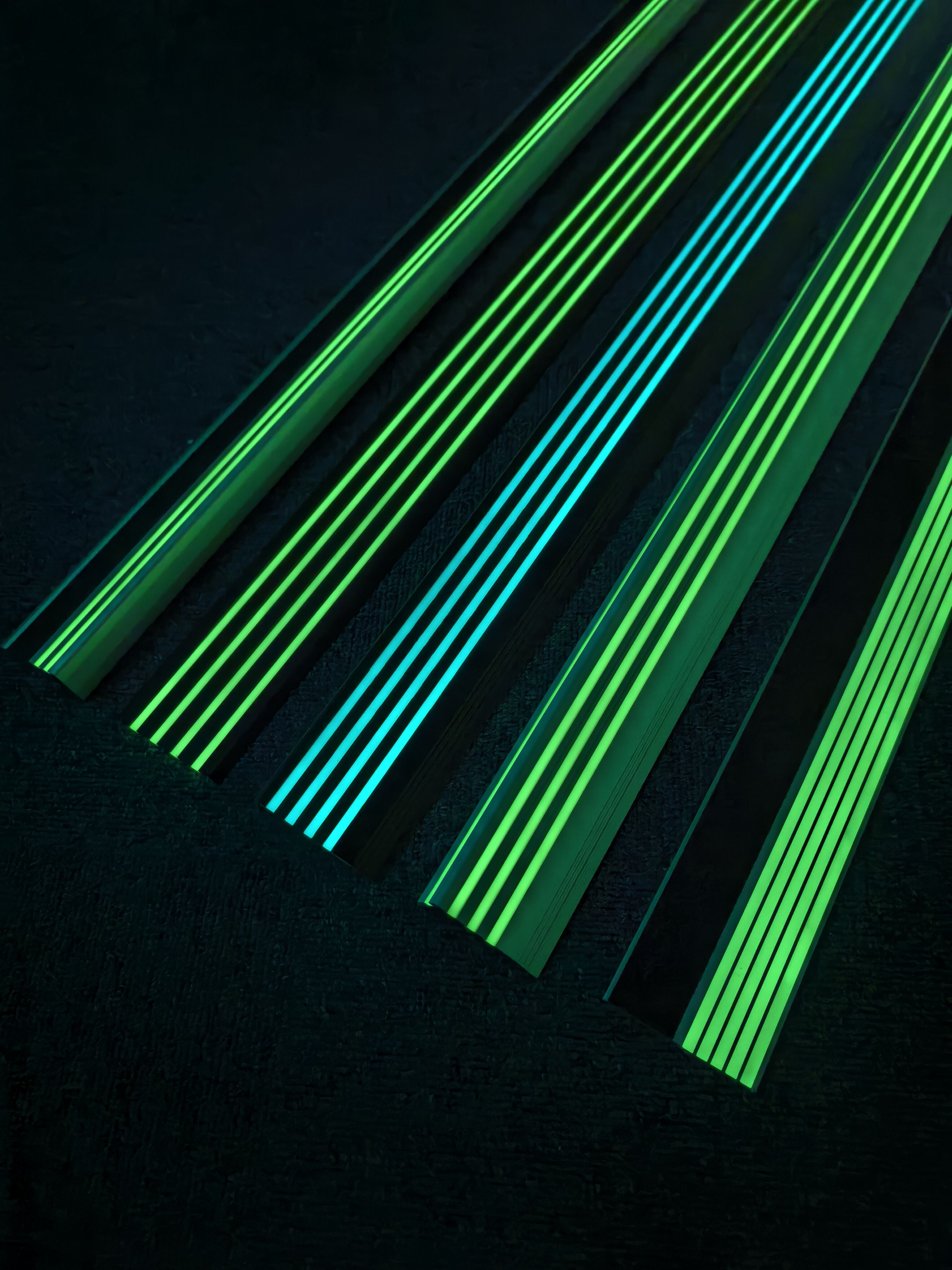
Staircase safety is a critical concern in both commercial and residential environments, particularly when lighting conditions are compromised. Whether during a power outage, an emergency evacuation, or simply in a dimly lit corridor, the risk of misjudging a step edge increases dramatically. photoluminescent stair nosing has emerged as one of the most effective passive safety solutions available today, providing continuous, self-powered visibility exactly where it is needed most. By absorbing ambient light and re-emitting it in darkness, this technology ensures that stair edges remain clearly visible without any reliance on electrical power.
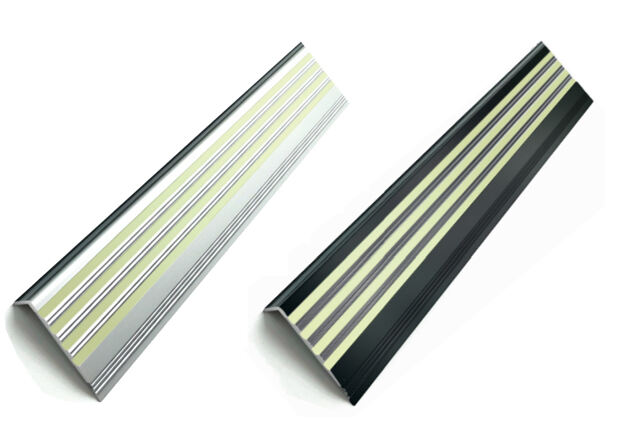
The adoption of photoluminescent stair nosing is growing steadily across industries including hospitality, healthcare, education, transportation hubs, and industrial facilities. Facility managers, architects, and safety officers are increasingly specifying this solution not only to meet regulatory requirements but to genuinely reduce slip-and-fall incidents in low-light scenarios. Understanding how photoluminescent stair nosing works, where it performs best, and how to select and install it correctly is essential for anyone responsible for building safety and compliance.
How Photoluminescent Stair Nosing Works
The Science Behind Photoluminescence
Photoluminescent stair nosing operates on the principle of photoluminescence, a process by which certain materials absorb photons from ambient light sources and then slowly release that stored energy as visible light. The active component in most photoluminescent stair nosing products is strontium aluminate, a compound known for its high luminance output and long afterglow duration. Unlike older zinc sulfide-based materials, strontium aluminate delivers significantly brighter and longer-lasting glow performance.
During normal lighting conditions, the photoluminescent stair nosing continuously charges itself using natural daylight or artificial indoor lighting. When the lights go out or visibility drops, the material begins emitting a steady green or blue-green glow that can remain visible for several hours. This passive charging and emission cycle requires no batteries, no wiring, and no maintenance beyond routine cleaning, making it an exceptionally reliable safety feature.
The glow intensity of photoluminescent stair nosing is measured in millicandelas per square meter (mcd/m²), and high-quality products are engineered to meet or exceed the thresholds specified by international safety standards. The initial brightness after darkness onset is typically the highest, gradually diminishing over time, but remaining perceptible well beyond the critical first minutes of an emergency.
Visibility Performance in Low-Light Conditions
The primary value of photoluminescent stair nosing lies in its ability to define the leading edge of each step clearly when ambient light is insufficient. In a darkened stairwell, the human eye struggles to perceive depth and edge contrast, which is precisely when missteps and falls are most likely to occur. The glowing edge strip provided by photoluminescent stair nosing creates an immediate visual reference that guides foot placement with confidence.
Research into emergency egress behavior consistently shows that people move faster and more safely along evacuation routes when those routes are clearly marked with photoluminescent guidance systems. Photoluminescent stair nosing is a foundational element of such systems, working in conjunction with floor path markings and exit signs to create a complete low-light navigation framework. The stair nosing specifically addresses the highest-risk transition points in any evacuation route.
Even in non-emergency situations, such as a cinema, a theater, or a parking structure where low light is a normal operating condition, photoluminescent stair nosing provides consistent, passive edge definition that reduces everyday slip-and-fall risk. Its value is not limited to crisis scenarios but extends to any environment where stair edges may be difficult to see.
Key Applications and Environments for Photoluminescent Stair Nosing
Commercial and Public Buildings
In commercial buildings such as office towers, shopping centers, and hotels, photoluminescent stair nosing is frequently installed as part of a broader fire safety and emergency egress strategy. Building codes in many jurisdictions now require or strongly recommend photoluminescent egress path markings in high-rise structures, and stair nosing is a central component of these systems. The ability to guide occupants safely down multiple flights of stairs during a power failure is a life-safety imperative that photoluminescent stair nosing directly addresses.
Hospitality environments present a particularly compelling use case. Hotels often feature decorative staircases in lobbies and common areas where aesthetic considerations are as important as safety. Modern photoluminescent stair nosing is available in a range of profiles and finishes that integrate cleanly with architectural design while delivering full safety performance. The product can complement both contemporary and traditional interior schemes without appearing industrial or utilitarian.
Transportation hubs including airports, train stations, and subway systems represent high-traffic environments where stair safety is paramount. These facilities operate around the clock, often with variable lighting conditions, and serve populations that include elderly travelers, people with visual impairments, and individuals carrying luggage. Photoluminescent stair nosing in these settings provides a consistent, maintenance-free safety layer that supports the diverse needs of all users.
Industrial and Institutional Facilities
Industrial facilities such as manufacturing plants, warehouses, and power generation sites often have staircases in areas where lighting may be limited, obstructed, or subject to failure. In these environments, photoluminescent stair nosing serves as a critical passive safety measure that remains functional regardless of electrical system status. Workers navigating stairways during shift changes, maintenance operations, or emergency shutdowns benefit directly from the edge visibility that photoluminescent stair nosing provides.
Healthcare facilities including hospitals, care homes, and clinics have a particular obligation to minimize fall risk for patients, residents, and staff. Stairwells in these buildings may be used during evacuations or power disruptions, and the consequences of a fall can be especially severe for vulnerable populations. Photoluminescent stair nosing in healthcare settings contributes to a comprehensive fall prevention strategy that complements handrails, non-slip surfaces, and adequate lighting design.
Educational institutions from schools to universities also benefit from photoluminescent stair nosing, particularly in older buildings where stairwell lighting may be inadequate or inconsistent. During fire drills, actual emergencies, or simply during evening events when building lighting is reduced, clearly marked stair edges help students and staff navigate safely. The durability of quality photoluminescent stair nosing means that once installed, it continues to perform reliably for many years with minimal upkeep.
Material Composition and Product Selection Criteria
Substrate Materials and Durability
Photoluminescent stair nosing is manufactured using a variety of substrate materials, each suited to different performance requirements and installation environments. Aluminum is among the most widely used substrates due to its combination of structural rigidity, corrosion resistance, and compatibility with photoluminescent inserts. Aluminum-bodied photoluminescent stair nosing is well suited to both interior and exterior applications and can withstand the mechanical stress of high foot traffic over extended service life.
Some photoluminescent stair nosing products incorporate a non-slip abrasive surface integrated directly into the profile. This anti-slip element addresses a secondary but equally important safety concern: traction. A stair nosing that is visible but slippery provides incomplete protection. The best products combine photoluminescent visibility with a carborundum or similar abrasive surface treatment that maintains grip even when wet or contaminated.
The photoluminescent insert itself is typically a cast or extruded strip of strontium aluminate-infused material bonded into a channel within the nosing profile. The quality of this bond and the concentration of the photoluminescent compound directly affect both the brightness and the longevity of the glow performance. Specifiers should look for products that provide documented luminance data and comply with recognized standards such as ISO 17398 or DIN 67510.
Selecting the Right Profile for Your Application
Photoluminescent stair nosing is available in a range of profiles designed to suit different stair constructions and aesthetic requirements. Retrofit profiles are designed to be surface-mounted onto existing stair treads using mechanical fixings or adhesive, making them suitable for upgrading staircases without major renovation. Recessed profiles are set into a routed channel in the stair tread, creating a flush finish that is less susceptible to impact damage and more visually refined.
The width and depth of the photoluminescent insert within the nosing profile also vary between products. Wider inserts provide greater luminous area and therefore higher overall visibility, which may be important in very large or complex stairwells. Narrower profiles may be preferred in applications where a more discreet appearance is desired while still meeting minimum luminance requirements.
Color compatibility is another practical consideration. While the photoluminescent glow is typically green or blue-green regardless of the insert's daytime appearance, the body of the photoluminescent stair nosing can be anodized or powder-coated in various colors to match flooring, handrails, or other architectural elements. This flexibility allows safety compliance to be achieved without compromising the visual coherence of the space.
Installation, Maintenance, and Compliance Considerations
Installation Best Practices
Correct installation is essential to ensure that photoluminescent stair nosing performs as intended and remains securely in place under continuous foot traffic. Surface preparation is the first critical step: the stair tread must be clean, dry, and free of any contaminants that could compromise adhesion or mechanical fixing. For surface-mounted profiles, pre-drilling and countersinking screw positions ensures a flush, secure fit that will not create a trip hazard at the nosing edge itself.
The positioning of photoluminescent stair nosing on the tread is equally important. The nosing should be placed at the very leading edge of the step, where it is most visible to a person descending the staircase. Misplacement even a few centimeters back from the edge significantly reduces the visual cue provided to the descending foot. Installers should follow manufacturer guidelines precisely and verify alignment before finalizing fixings.
In new construction, photoluminescent stair nosing can be specified as part of the stair design from the outset, allowing for recessed installation that integrates cleanly with the tread surface. This approach is generally preferred in high-specification commercial projects where both aesthetics and performance are priorities. Coordination between the stair fabricator and the nosing supplier at the design stage avoids costly remediation later.
Maintenance Requirements and Long-Term Performance
One of the most significant practical advantages of photoluminescent stair nosing is its minimal maintenance requirement. Unlike electrically powered emergency lighting, photoluminescent stair nosing has no components that can fail, no batteries to replace, and no circuits to test. Routine maintenance consists primarily of keeping the photoluminescent surface clean, as accumulated dirt or coatings can reduce the material's ability to absorb ambient light and therefore diminish its glow output.
Periodic inspection should confirm that the nosing remains securely fixed, that the photoluminescent insert has not been physically damaged, and that the anti-slip surface retains adequate texture. In high-traffic environments, the abrasive surface may wear over time, and replacement of the nosing strip may be necessary to maintain both traction and luminance performance. Most quality photoluminescent stair nosing products are designed for straightforward replacement without requiring modification to the stair tread.
Compliance documentation is an important aspect of long-term management. Facility managers should retain records of the photoluminescent stair nosing products installed, including their luminance specifications and the standards to which they were tested. This documentation supports building compliance audits and provides a reference point for future replacement or upgrade decisions.
FAQ
How long does photoluminescent stair nosing glow after the lights go out?
The afterglow duration of photoluminescent stair nosing depends on the quality of the photoluminescent compound used and the level of charge it received before darkness. High-quality strontium aluminate-based products typically provide visible glow for between 8 and 24 hours after full charge, with the brightest output occurring in the first 30 to 60 minutes. For emergency egress purposes, the critical performance window is the first few hours, during which the glow should remain clearly perceptible to the human eye.
Does photoluminescent stair nosing require any electrical connection or power source?
No. Photoluminescent stair nosing is entirely passive and requires no electrical connection, battery, or external power source of any kind. It charges automatically using ambient light — whether natural daylight or artificial indoor lighting — and releases that stored energy as visible glow when surrounding light levels drop. This self-contained operation is one of its primary advantages, as it remains functional even during complete power failures.
Can photoluminescent stair nosing be used outdoors?
Yes, photoluminescent stair nosing can be used in outdoor applications, provided the product is specifically designed and rated for exterior use. Outdoor-rated photoluminescent stair nosing typically features an aluminum or other corrosion-resistant substrate, UV-stable photoluminescent inserts, and fixings appropriate for exposure to moisture and temperature variation. Outdoor installations benefit from natural daylight charging, which is generally more intense than artificial light and supports strong glow performance.
What standards govern the performance of photoluminescent stair nosing?
Several international and regional standards address the performance of photoluminescent safety markings, including stair nosing. ISO 17398 provides a classification system for photoluminescent safety signs based on luminance output. DIN 67510 specifies measurement methods and minimum performance thresholds for photoluminescent materials. In the United States, ASTM E2072 covers photoluminescent egress path markings. Specifiers should confirm that the photoluminescent stair nosing they select has been tested and certified to the standards applicable in their jurisdiction.