EN
EN



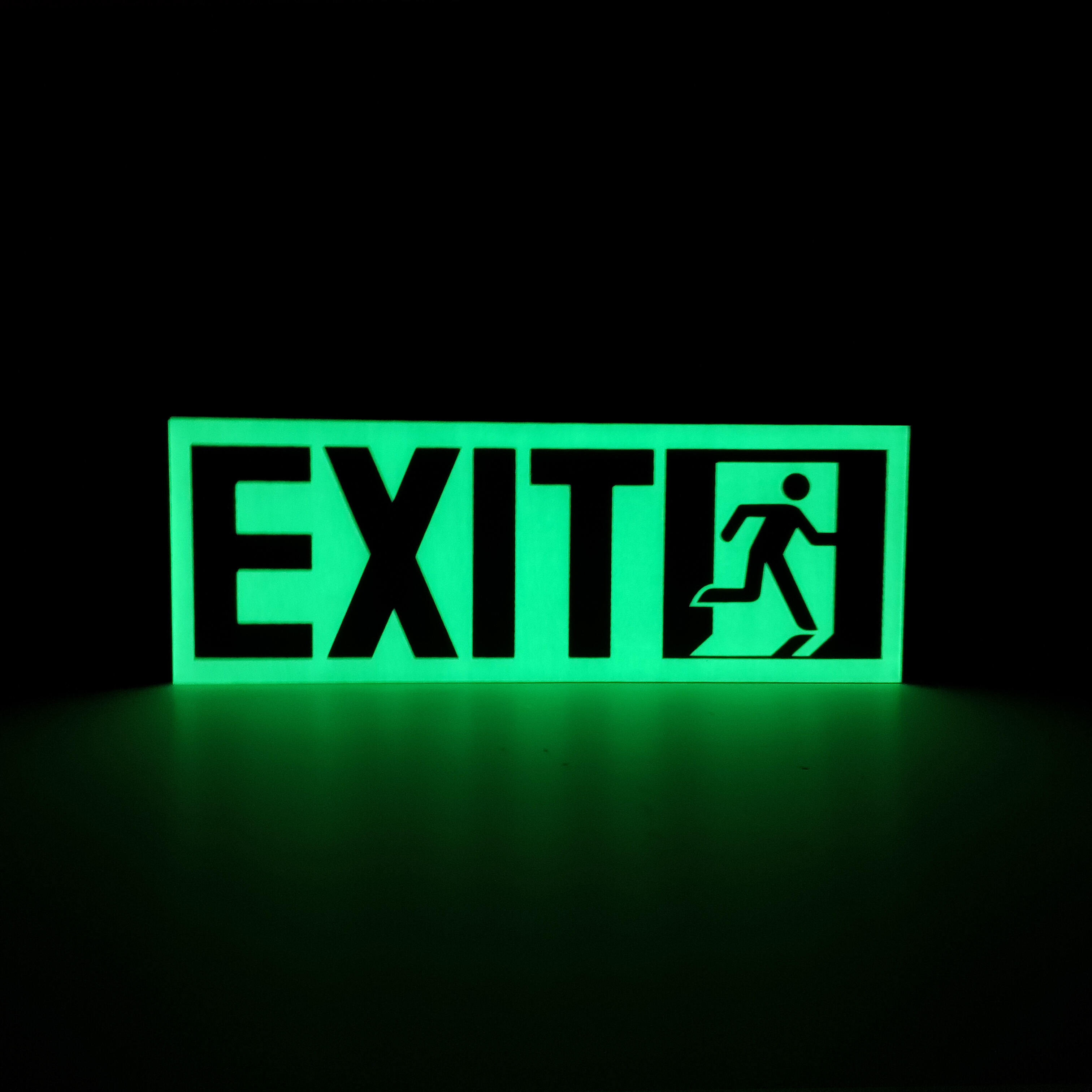
Understanding how long an exit sign glow in the dark should maintain visibility is critical for building safety, emergency preparedness, and regulatory compliance. Photoluminescent exit signs rely on stored light energy to provide illumination during power outages, yet their glow duration varies significantly based on material quality, charging conditions, and installed location. Building managers, safety officers, and facility planners must recognize that not all glow-in-the-dark exit signs perform equally, and insufficient luminescence duration can compromise evacuation effectiveness during critical moments when electrical lighting fails.

International safety codes and performance standards establish minimum glow duration requirements to ensure that every exit sign glow in the dark remains readable throughout the evacuation process. These standards account for real-world scenarios including complete darkness, smoke-filled environments, and extended power failures where occupants depend entirely on passive illumination to locate emergency exits. This article examines the specific performance benchmarks, testing methodologies, and practical factors that determine how long photoluminescent exit signage should continue glowing, providing facility professionals with the technical knowledge needed to select compliant products and maintain optimal emergency visibility systems.
Regulatory Minimum Glow Duration Standards
International Building Code Requirements
The International Building Code establishes baseline requirements specifying that photoluminescent exit signs must maintain minimum luminance levels for prescribed durations following light source removal. According to IBC provisions referencing ASTM E2072 and UL 1994 standards, an exit sign glow in the dark must remain visible for at least ninety minutes after all ambient lighting ceases. This ninety-minute threshold represents the estimated maximum time required for complete building evacuation under adverse conditions, including high-rise structures, healthcare facilities, and complex industrial environments where egress paths extend considerable distances.
These code provisions mandate specific luminance measurements at defined intervals, requiring initial brightness of at least thirty millicandelas per square meter immediately after charging ceases, declining to a minimum of five millicandelas per square meter at the ninety-minute mark. The exit sign glow in the dark must maintain legibility throughout this decay curve, ensuring that directional arrows, text elements, and pictograms remain distinguishable even as brightness gradually diminishes. Compliance testing occurs in controlled laboratory environments that simulate complete darkness conditions, eliminating any potential contribution from emergency lighting, moonlight, or residual ambient sources.
NFPA Life Safety Code Specifications
The National Fire Protection Association Life Safety Code imposes parallel requirements that align with IBC provisions while adding specific application guidance for various occupancy classifications. NFPA 101 mandates that every exit sign glow in the dark installed as a primary or supplementary egress marking must demonstrate sustained performance meeting or exceeding the ninety-minute minimum. Healthcare occupancies, correctional facilities, and assembly venues face additional scrutiny due to evacuation challenges associated with non-ambulatory occupants, security protocols, or high occupant loads that extend egress duration beyond typical scenarios.
NFPA standards further specify that the exit sign glow in the dark must maintain contrast ratios sufficient for recognition at viewing distances consistent with sign placement heights and corridor dimensions. This performance requirement acknowledges that raw luminance measurements alone inadequately predict real-world visibility, particularly when smoke, visual impairment, or panic conditions affect occupant perception. Testing protocols therefore incorporate human factors research that correlates luminance decay curves with actual recognition distances, ensuring that standardized performance thresholds translate into practical wayfinding effectiveness during emergency conditions.
European and International Standard Variations
European standards including ISO 16069 and DIN 67510 establish comparable but slightly different requirements for photoluminescent safety signage. These standards typically mandate that an exit sign glow in the dark achieve minimum luminance of twenty-eight millicandelas per square meter initially, declining to seven millicandelas per square meter after sixty minutes. The shorter European duration reflects different building construction practices, occupancy patterns, and evacuation modeling assumptions that presume faster egress completion in structures with more stringent compartmentation and escape route design requirements.
International Maritime Organization regulations impose even more stringent requirements for shipboard applications where an exit sign glow in the dark must function reliably in environments subject to vibration, temperature extremes, and prolonged darkness during nighttime emergencies. IMO standards require minimum glow duration of ten hours at reduced luminance levels, recognizing that maritime evacuation scenarios may involve extended periods in lifeboats, muster stations, or survival craft where passive illumination provides the only available navigation aid. These specialized requirements demonstrate how glow duration standards adapt to specific risk profiles and operational contexts beyond conventional building applications.
Technical Factors Affecting Glow Duration Performance
Photoluminescent Pigment Quality and Loading Density
The fundamental chemistry of photoluminescent materials directly determines how long an exit sign glow in the dark maintains visibility after charging ceases. Modern alkaline earth aluminate pigments doped with rare earth elements provide superior performance compared to legacy zinc sulfide formulations, offering both greater initial brightness and slower luminance decay rates. High-quality strontium aluminate pigments activated with europium and dysprosium demonstrate afterglow persistence extending well beyond minimum regulatory requirements, with measurable luminance continuing for twelve to twenty-four hours under laboratory conditions, though practical visibility typically diminishes after three to four hours.
Pigment loading density within the sign substrate significantly impacts performance duration, with higher concentration levels producing both brighter initial output and extended glow periods. Premium exit sign glow in the dark products incorporate pigment loadings exceeding thirty percent by weight, ensuring that sufficient phosphorescent material exists to store and release energy over extended periods. Lower-quality products utilizing minimal pigment loading may technically meet ninety-minute visibility standards under ideal testing conditions while providing inadequate performance in real-world installations where charging conditions remain less than optimal or where ambient temperature, humidity, or surface contamination accelerates luminance decay.
Charging Light Exposure Duration and Intensity
Photoluminescent materials require adequate light exposure to achieve full energy storage capacity before they can sustain the prolonged glow duration that safety standards demand. An exit sign glow in the dark must receive sufficient illumination from ambient lighting, natural daylight, or dedicated charging sources to populate electron trap states within the crystal lattice structure that subsequently release energy as visible light during the decay process. Inadequate charging directly compromises glow duration, with partially charged signs exhibiting dramatically shortened visibility periods that may fall well below regulatory minimums despite using compliant materials.
Industry testing demonstrates that complete charging typically requires continuous exposure to lighting levels of at least fifty lux for approximately one hour, with higher intensity sources achieving full charge in proportionally shorter periods. Installations in corridors, stairwells, or service areas with limited natural light and inadequate artificial illumination may never achieve complete charging, resulting in an exit sign glow in the dark that performs below specification even when constructed from premium materials. Building design teams must therefore coordinate lighting system design with photoluminescent sign placement, ensuring that every sign location receives adequate illumination during normal occupancy periods to guarantee full charging before emergency conditions arise.
Environmental Conditions and Surface Maintenance
Temperature extremes significantly affect photoluminescent decay rates, with elevated temperatures accelerating energy release and reducing effective glow duration. An exit sign glow in the dark installed near heat sources, in mechanical rooms, or in unconditioned spaces may exhibit noticeably shorter visibility periods compared to identical products in climate-controlled environments. Temperature coefficients vary by pigment formulation, but typical strontium aluminate materials experience approximately ten to fifteen percent reduction in effective glow duration for every ten-degree Celsius increase above standard testing temperatures of twenty-three degrees Celsius.
Surface contamination from dust, oils, smoke residue, or environmental pollutants creates an optical barrier that reduces both charging efficiency and emitted luminance, effectively shortening the functional glow period. Regular cleaning protocols become essential for maintaining optimal performance, particularly in industrial environments where airborne particulates accumulate rapidly on vertical surfaces. An exit sign glow in the dark located in dusty warehouses, manufacturing facilities, or parking structures requires scheduled maintenance at intervals determined by contamination rates to ensure that surface conditions do not compromise visibility duration during actual emergencies when reliable performance becomes critically important.
Testing Methodologies and Verification Procedures
Laboratory Standardized Testing Protocols
Manufacturers verify that each exit sign glow in the dark meets duration specifications through standardized laboratory testing following ASTM E2072 or equivalent protocols. These procedures establish controlled conditions including specific light source characteristics, charging duration, ambient temperature, and humidity levels to ensure repeatable measurements. Testing apparatus incorporates calibrated photometers or luminance meters positioned at defined angles and distances from the sign surface to measure brightness decay curves over the required ninety-minute minimum period plus extended intervals to characterize long-term performance characteristics.
Standardized testing eliminates variables that might artificially enhance or degrade performance measurements, providing objective data that facility managers can compare across different product offerings. Complete test reports document initial luminance immediately after charging ceases, luminance values at ten-minute intervals throughout the decay period, and final measurements confirming that minimum thresholds remain satisfied at the ninety-minute mark. These comprehensive decay curves reveal not only whether an exit sign glow in the dark meets minimum requirements but also provide insight into performance margins that indicate how reliably the product will perform under less-than-ideal field conditions where charging may be incomplete or environmental factors may accelerate decay.
Field Verification and Periodic Inspection
Building codes require periodic inspection of installed photoluminescent egress systems to verify that every exit sign glow in the dark continues meeting performance specifications throughout its service life. Field verification procedures typically involve simulating power failure conditions by extinguishing all lighting in the affected area and observing whether installed signs maintain adequate visibility for the prescribed duration. Inspectors document initial brightness, legibility at typical viewing distances, and sustained visibility at thirty-minute intervals throughout the test period, identifying any signs exhibiting degraded performance requiring replacement or remediation.
Practical field testing confronts challenges absent from controlled laboratory environments, including inability to achieve complete darkness in areas with windows, emergency lighting activation that interferes with photoluminescent performance observation, and difficulty maintaining building non-occupancy throughout extended testing periods. Inspectors therefore develop modified protocols that balance regulatory compliance verification with operational practicality, sometimes utilizing portable darkness chambers or conducting tests during overnight periods when building vacancy and external darkness conditions facilitate accurate assessment. These field verification procedures confirm that theoretical laboratory performance translates into reliable real-world function where an exit sign glow in the dark must operate under actual installation conditions rather than idealized testing scenarios.
Accelerated Aging and Long-Term Performance Validation
Photoluminescent materials can degrade over time due to ultraviolet exposure, chemical reactions with environmental contaminants, or mechanical damage to protective coatings, potentially reducing glow duration below specification levels. Accelerated aging protocols expose sample signs to intensified ultraviolet radiation, thermal cycling, humidity extremes, and chemical exposures compressed into abbreviated testing periods that simulate years of actual service. These tests verify that an exit sign glow in the dark will maintain compliant performance throughout its expected service life, typically projected at ten to twenty-five years depending on material quality and environmental conditions.
Long-term validation testing documents luminance decay curve changes over simulated aging periods, revealing whether initial performance margins erode to levels approaching minimum compliance thresholds. Products demonstrating substantial performance degradation during accelerated aging tests may technically meet standards when new while presenting reliability concerns for long-term installations. Facility managers selecting photoluminescent egress marking systems should therefore request accelerated aging test data confirming that the exit sign glow in the dark will maintain adequate performance margins throughout the anticipated replacement cycle, avoiding premature failure scenarios that compromise safety system reliability during the years between installation and eventual product renewal.
Practical Application Considerations and Installation Best Practices
Optimal Placement for Charging and Visibility
Strategic placement determines whether an exit sign glow in the dark achieves its full performance potential in actual service. Signs require installation locations that receive adequate ambient illumination during normal building operation while remaining visible from approach distances consistent with corridor dimensions and sightline obstructions. Locations near windows benefit from natural daylight charging but may experience temperature extremes that accelerate luminance decay. Interior locations with consistent artificial lighting provide stable charging conditions but require attention to lamp selection, control strategies, and maintained illumination levels that ensure complete energy storage.
Mounting height significantly affects both charging efficiency and emergency visibility, with higher placements receiving better illumination from ceiling-mounted light fixtures while increasing viewing distances that demand higher luminance levels for legibility. Standard practice positions an exit sign glow in the dark at heights between six and eight feet above finished floor level, balancing charging optimization with visibility requirements. Installations in areas with high ceilings, such as atriums, gymnasiums, or warehouses, may require supplemental charging lights or alternative mounting strategies to ensure adequate performance, while installations in low-ceiling spaces must avoid positions where the sign becomes obscured by typical occupant sight lines or where mounting proximity to light fixtures creates glare conditions during normal operation.
Integration with Emergency Lighting Systems
Photoluminescent egress marking systems function most effectively when integrated with rather than isolated from emergency lighting infrastructure. Battery-powered emergency lights provide initial high-intensity illumination immediately following power failure, enabling rapid egress initiation while simultaneously recharging any exit sign glow in the dark within the illuminated area. This synergistic relationship extends effective visibility duration beyond what either system achieves independently, with photoluminescent signs providing backup visibility if emergency lighting fails while emergency lighting maintains charging capacity that sustains photoluminescent performance.
Design coordination ensures that emergency lighting fixtures include coverage areas encompassing nearby photoluminescent signs, extending their functional glow duration through continued charging even during power outages. This integration strategy proves particularly valuable in extended egress scenarios where occupants may spend considerable time in stairwells or corridors during high-rise evacuations. The exit sign glow in the dark benefits from periodic recharging as occupants pass emergency lighting fixtures, maintaining higher luminance levels throughout the evacuation process compared to signs relying solely on energy stored before the power failure occurred. Coordinated system design thereby creates redundant visibility assurance that enhances overall life safety system reliability.
Maintenance Schedules and Performance Monitoring
Establishing proactive maintenance protocols ensures that every exit sign glow in the dark maintains optimal performance throughout its service life. Maintenance schedules should incorporate quarterly visual inspections checking for surface damage, contamination, or physical displacement that might compromise visibility or charging efficiency. Annual functional testing simulates emergency conditions to verify glow duration compliance, documenting performance trends that reveal gradual degradation requiring intervention before signs fall below minimum specifications. Cleaning protocols remove accumulated dust, oils, or other contaminants using appropriate methods that avoid damaging photoluminescent coatings or reducing optical transmission properties.
Documentation systems track individual sign performance over time, identifying patterns that inform replacement decisions and product selection for future installations. Signs consistently exhibiting marginal performance may indicate inadequate charging conditions requiring lighting system modifications rather than sign replacement. Conversely, widespread degradation across similar products suggests material quality issues warranting manufacturer engagement or alternative product specification. Systematic monitoring enables facility managers to optimize life cycle costs while maintaining reliable emergency egress visibility, ensuring that an exit sign glow in the dark delivers consistent performance meeting both regulatory requirements and practical safety objectives throughout building occupancy periods that may span decades.
FAQ
What happens if an exit sign glows for less than ninety minutes?
Exit signs failing to maintain visibility for the required ninety-minute minimum period violate building and fire safety codes, creating potential liability exposure and compromising occupant safety during extended evacuations. Facilities with non-compliant signs face citations during inspections and must implement immediate corrective action including sign replacement, improved charging illumination, or installation of supplementary emergency lighting systems. Short glow duration typically results from inadequate photoluminescent material quality, insufficient charging light exposure, environmental degradation, or surface contamination blocking light emission. Building managers discovering performance deficiencies should conduct systematic evaluation identifying root causes and implementing appropriate remediation to restore code compliance and safety system reliability.
Can photoluminescent exit signs glow too long or too brightly?
While safety codes establish minimum performance thresholds, no maximum limits restrict glow duration or initial brightness for photoluminescent exit signs. Products exceeding minimum specifications provide additional safety margins accommodating incomplete charging, accelerated decay from environmental factors, or extended evacuation scenarios requiring visibility beyond standard assumptions. Excessively bright signs can theoretically create temporary adaptation issues when occupants transition from lighted areas into darkened egress routes, though practical brightness levels in commercial products remain well below thresholds producing significant adaptation delays. Premium products offering extended glow duration and higher luminance levels represent conservative design approaches that enhance safety system reliability rather than introducing operational concerns.
Do LED exit signs last longer than photoluminescent signs in emergencies?
LED exit signs equipped with battery backup systems provide illumination for durations determined by battery capacity, typically ninety minutes matching photoluminescent sign requirements but potentially extending to several hours with larger battery installations. However, LED signs require regular battery testing, periodic replacement, and electrical infrastructure creating maintenance obligations and potential failure modes absent from passive photoluminescent systems. Photoluminescent signs require no electrical connection, eliminate battery maintenance concerns, and continue functioning indefinitely provided they receive adequate charging light, making them inherently more reliable for long-duration emergencies. Optimal egress systems often combine both technologies, using electrically powered signs for primary visibility while incorporating photoluminescent signs as fail-safe backup ensuring visibility even if electrical systems and batteries simultaneously fail.
How can building managers verify their photoluminescent signs meet duration standards?
Building managers verify photoluminescent exit sign performance through periodic testing that simulates power failure conditions and documents glow visibility duration. Testing procedures involve ensuring signs receive adequate charging exposure during normal operations, then extinguishing all lighting in the area and observing whether signs remain legible throughout the required ninety-minute period. Formal verification may incorporate calibrated luminance meters measuring brightness at specified intervals, comparing results against code-required thresholds. Managers should maintain testing documentation demonstrating compliance during routine inspections and should establish schedules for periodic retesting confirming continued performance as signs age. Products bearing third-party certification marks from recognized testing laboratories provide additional assurance that signs meet applicable standards when properly installed and maintained according to manufacturer specifications.